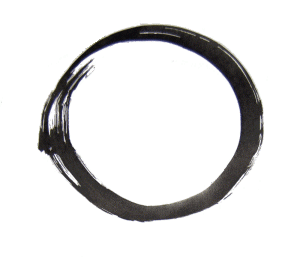
It can be enticing to analyse zen paintings. Like the actions of people around us, there’s no end of inferring motivation and meaning. That’s part of the search, I suppose. Hoping there is something more meaningful than just what is.
Daido Loori spoke (how strange to write that – past tense, gone, gone, gate, gate…) of this in Painted Rice Cakes Satisfy Hunger.
Student: Though it seems that a painted rice cake is real, I’ve never eaten one and I don’t want to, either. What are we talking about?
Teacher: With the painted rice cake?
Student: Yes.
Teacher: Painted rice cake is a reference to a classic image found in Zen literature. In the Linji school it is said that painted cakes do not satisfy hunger; that is, if someone is hungry, a painting of a cake will not help them. Dogen says that painted cakes do satisfy hunger. It all depends on how you understand painted cakes, hunger and satisfaction.What you can say about painted cakes, hunger and satisfaction, you can say about all imagery — liturgy, music, sculpture, painting, dance, calligraphy, gardening, flower arranging, tea ceremony. Whether or not it satisfies depends on how you understand it, how you understand not satisfying; what is satisfaction; what is not satisfaction; how you understand an image; how you understand self and other. That is basically what we are talking about. Anything else?
Student: No.
Teacher: May your life go well.
Student: Thank you for your answer.
I have trouble telling a painted rice cake from a real one. The strange thing is the real one calls out all six senses in a convergence of evidence that should make it “real”. But that painted rice cake, that sense of hunger and satisfaction I get from it seems so real. That conversation I interpret as meaning something, that action I infer as meaning something else. So much more real in my mind sense. Eating so many painted rices and thinking them real, why do I wonder how the heck did I gain so much excess baggage?
Daido Loori continues: When you sit on your cushion, get rid of everything. A single thought separates heaven and  earth, you and the ten thousand things. When a thought comes up, throw it away, get back to your practice. Be your practice with your whole body and mind. That is what your practice is — being it with your whole body and mind; whether it’s cooking, cleaning, working with a koan, sitting, laughing, dancing, crying.
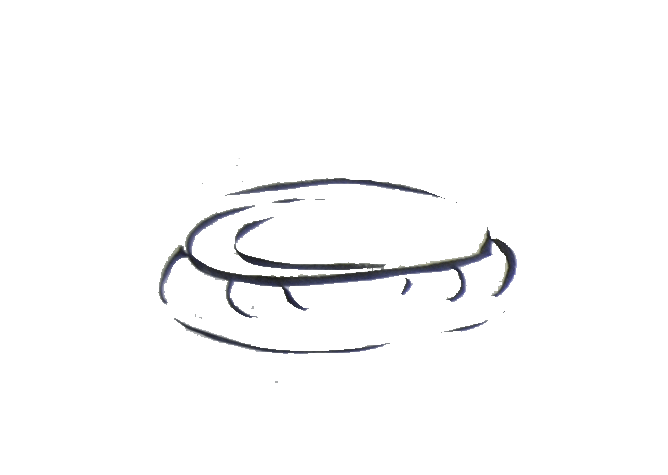
from Enso by Audrey Seo: Chapter 12. Rice Cake
Ryochu Nyoryu says, “Eat this and have a cup of tea,” asking the viewer not to worry about the philosophical implications of the image, but merely to relax and have a snack.
Thank you for practising,
Enjoy your tea & rice cakes!
Genju


 How is that enso drawing practice coming along?
 108zenbooks