I was putting together a bioblurb for a course I’ll be teaching in January and felt a strange sense of inauthenticity about what the time lines suggest about my skills. Apparently, I’ve been doing this for 15 years and that for 35, not to mention the other for 12 and something else for only 3 years. Of course, the thing I did for three years is what I loved most, what I’ve done for only the last year is what I feel best at, and the thing I have been doing for the last 35 years is what I feel least skilled at. Time is strange that way and it makes me leary when I hear it used as a marker of development or passion.
Another strange thing about time is how there isn’t enough of it. Seemingly. I love reading Adam’s blog Fly Like a Crow simply because it reminds me of those baby-powdered days of having a little one in our lives. The Kid will kill me if I upload any pictures of her so I can’t share how adorable she was… is… These years have indeed flown like crows. If you’re hearing Tevye in the background belting out “Sunrise, Sunset” then you know what I mean. There are no regrets really because I loved every moment I had with The Kid. I was in graduate school and managed to set my schedule so that I was either home when she got home or could pick her up to go to various after school activities. (Except for the one time I forgot to pick her up at school thinking it was Tuesday when she took the bus but it was actually Wednesday when she had piano lessons.)
Time crimps down on my desires when I think about how much time I have with Frank. Call it greedy but 30 years is not enough and the idea of only having 30 more seems unfair. I get pelted with rotten tomatoes by my lady friends when I whinge about this. And I duly feel unheard and unsupported in my selfishness. But you get what I mean, I hope. Not only am I astounded that 3 decades have passed together, I’m astounded that 30 years have passed.
When I reflect on my career path, something I do more and more of lately, a different twinge about time’s passage arises. My first encounter with the concept of not enough time to consume came in an interview for my first internship at a local hospital. The interviewers expressed serious concern that I might not be a “good investment” in training. I was already in my 30’s and what could I accomplish in the time left, they asked. Interestingly, I launched into all the things I had aspirations for, some of which I’ve actually done and many of which I had no idea would lead me to this point in my life. But I won’t deny that I often feel I’ve wasted time. My thinking goes something like this: if I had kept practising the piano, I would have been playing for 40 years. If I had stayed in art school, I’d have been painting for 35 years. If I had kept all the lint I found in my pockets, I’d have enough to knit a hat.
In Kaza’s book, Hooked, David Loy and Linda Goodhew write about Consuming Time. They explain how we commodify time (get the most product out of a moment), objectify it (time outside mind), and fear the lack of it (fear of impermanence and death). I’ve struggled with Dogen’s being-time and momentarily “get it.” Time is not something separate from the ongoing cultivation of self. It is the cultivation of self which is not possible with transition. I like Loy & Goodhew’s use of music as an example of being-time where the nature of the musical note and its expression are embodied as time.
Loy & Goodhew also made an interesting comment that the point is not to slow down in trying to cultivate being-time. Some things, as they point out, are better experienced at a higher pace. There is good reason some folks like polkas, I suppose. That made me think about my preferences for being-time at different paces which lead to digging up an article from October about the reasons time flies when you’re growing old.
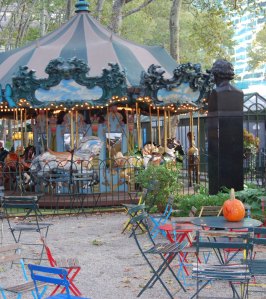
In Why Does Time Speed Up as We Grow Older, the author explores various theories for our subjective experience of time. The long and short of it (to save time here!) is that when we were younger, everything was new and so held our attention. As we get older we develop more automatic processes which carry us to the end point of our chores, events, projects. We pay less attention to the moment-by-moment experience because we’ve been-there-done-it. Ironically, all this accomplishes is a consumption of time outside being; in other words, we get caught in waiting for that new experience and either rush past it or miss the new in the ordinary. We feel we only had a moment when more actual time has passed by us, effectively losing time in the process. t’s also an issue of percentages and proportions. A year when we were (are?) 20 years old is a larger percentage of our life than when we are (were?) 60. At the same time, at 20 we likely focused on a smaller slice of time (meet you tonight!) than at 60 (five years to retire into poverty?!). It seems then that our experience of being-age is a matter of where and how we choose to place our attention.
How old are you really? Try this: Start a timer. Close your eyes and sit for what you sense is ONE MINUTE . When you think the minute is up stop the timer. How much time has actually passed?
If the actual time is more than 1 minute, you’re might be older than you think – regardless of what the clock says.
If time passing is subjective and if, in fact, we are the embodiment of time itself, it makes sense to cultivate a practice of mindfulness. Not the la-la-be-in-the-now presence but the truly challenging aspect of being present to what is unfolding as our life. It means connecting with our experience, good, bad or indifferent, without preference (which takes us out of mind) and with an awareness that this precious living-time is all there is.
Thank you for practising,
Genju
PS: I noticed this morning that Norman Fischer’s dharma talks from Deep Time, a retreat he gave at Upaya Zen Center, are now being uploaded on the dharma podcast page.