

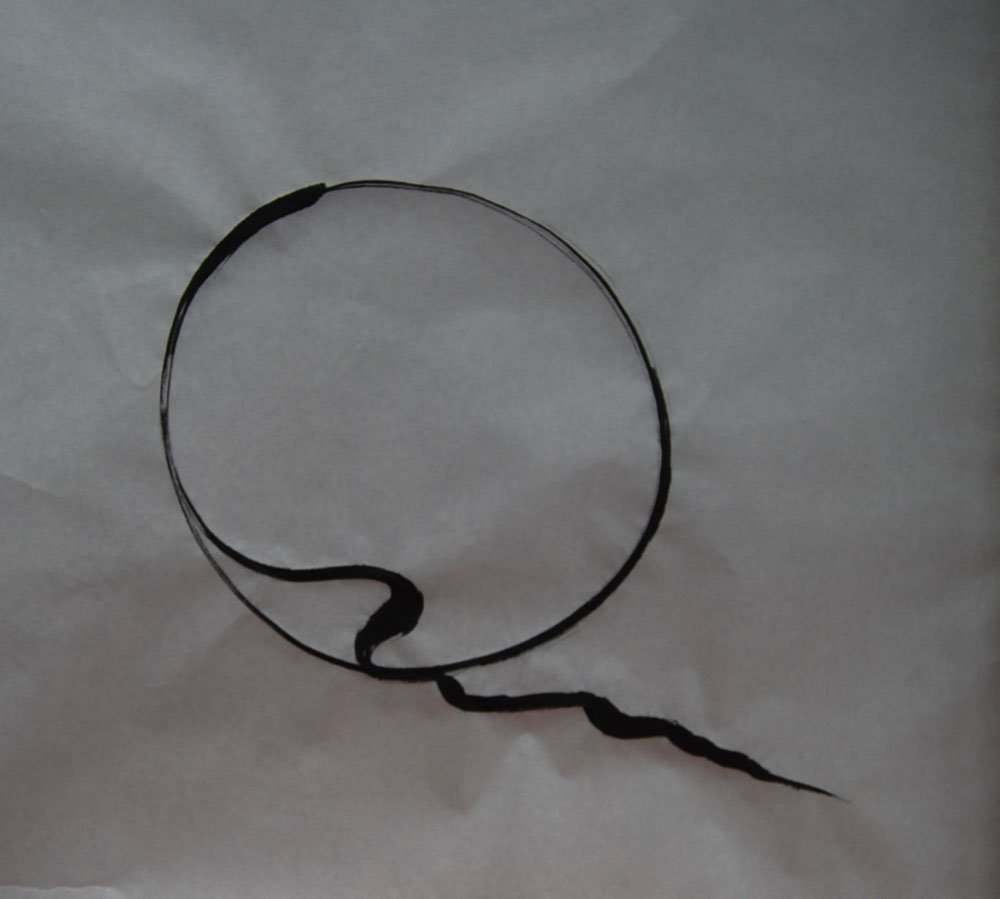
the stream of all ancestors
carrying the wisdom
of all my teachers
in empty hands,
shaped, hollowed out,
by the stream of
all ancestors
~~~~~~~~~~~~~~~~~~~~~~~~~~~~~~~~~~~~~~~~~~~~~~~~~~~~~~~~~~~~~~~~~
Thich Nhat Hanh has written almost a hundred books; I’ve lost count. Each one is a jewel but none as challenging and raw as Cultivating the Mind of Love. In it, he speaks candidly of his first love, a nun met when he was teaching at a temple in the Highlands of Vietnam.
I knew that I loved her.
How simple. How incredible. I knew that I loved her. Thay takes this story of his “first love” and weaves it into a journey to find our “original face.” Just as the face we are born with may not have been our original face, our first love may not really be our “first love.” So he “goes upstream” to show the many streams that feed into who we are in this moment. For Thich Nhat Hanh, the source of who he is in the present moment arose in his childhood experiences of seeing a drawing of the Buddha, searching for the hermit in the woods, drinking from a clear mountain stream, his brother’s ordination as a monk, and his mother’s dedication to his well being. When he met the young nun who ignited strong feelings of love, he writes that he could see the line of ancestors that flowed into the stream of his life and hers.
Please look into the river of your own life, and see the many streams that have entered it, that nourish and support you. If you practice the Diamond Sutra and see the self beyond the self, the person beyond the person, the living being beyond the living being, the life span beyond the life span, you will see that you are me, and you are also her. Look back at your own first love and you will recognize that your first love has no beginning and no end. It is always in transformation. (p. 60)
He goes on to say,
Whether water is overflowing or evaporating depends on the season.Whether it is round or square, depends on the container. Flowing in spring, solid in winter, its immensity cannot be measured, its source cannot be found. In an emerald creek water hides a dragon king. In a cold pond it contains the bright full moon. On a bodhisattva’s willow branch, it sprays the nectar of compassion. One drop of water is enough to purify and transform the world in ten directions. Can you grasp water through form? Can you trace it to its source? Do you know where it will end? It is the same with your first love. Your first love has no beginning and will have no end. It is still alive in the stream of your being. Don’t believe it was only in the past. Look deeply into the nature of your first love, and you will see the Buddha. (pp. 75-76)
I struggle with this, trying honestly to see all the loves and not the losses. Going to the source of the mind of love, bodhicitta, means letting go of the loss and opening to each love as a branch of the stream that originates deep in the past and flows forever into the future. If I value that powerful, steady outpouring of love in the river of my life, I have to value myself as a steam in the lives of those I touch.
For now, I invite you to look far enough into the future, so far that you cannot help but see yourself, become yourself, the source of a stream of love and life.
Thank you for practicing,
Genju
 108zenbooks