Unknown's avatar

upaya

The purpose of Zen practice is the perfection of character.

Yamada Roshi quoted in The Practice of Perfection by Robert Aitken
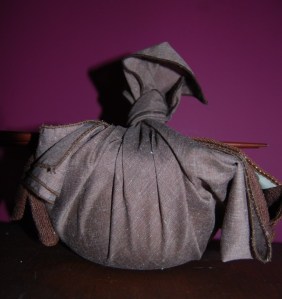
As you read this, I will be winging my way to Sant Fe, New Mexico for a retreat at Upaya Zen Center.  A year ago I arrived at the doors of Upaya ZC feeling like I had walked every mile from home.  My heart in tatters, my moral compass spinning, I had no expectations that 7 days was going to put a dent in my character failings.

It was not my first retreat but it was the first that included formal meals (oryoki).  The mysteries of unfolding the linen wrappings, setting out the bowls and utensils, and knowing which spoon to use in which bowl had intimidated me so much I blocked out the request to read the 30-some pages (!) of instructions sent ahead of the retreat.  By the second meal I was truly panicked.  I could stumble along with the order of use of the spoons and chopsticks by watching my neighbours.  But wrapping up the bowls at the end of the meal with a lotus leaf knot and without the bowls skittering across the zendo floor in the process baffled me.  So I cheated: despite the injunction not to read anything during the sesshin, I pulled out the instructions I had wisely brought along and practiced in my room with a towel.

Achieving success was less about looking like an oryoki dork as it was about fully enjoying the beauty and perfection of the whole process from beginning to end.  There was something deeply satisfying about the laying out of the bowls and utensils, the rhythm and cadence of the serving of the dishes, the bows to the servers, the slap of feet on the floor of the zendo in time to the drumming which opened the chanting.  Everything dissolved into a dance with partners who quickly moved out of sight.

Like life.

And in this life I have, I am slowly learning how to wrap things up as skillfully as I can when all is done.

Thank you for practicing,

Genju

Please visit Jomon at Nothing to Attain for a beautiful linking of oryoki and compassion

Unknown's avatar

endurance

There’s a wall the springs up about halfway through anything I try to do.  I used to think there was no warning; as I learned to listen closely to my body, I began to detect the early sounds of the bricks thumping into place.  It doesn’t stop me from running smack into it but it has taught me to slow the pace so I don’t embed myself deep in the stonework on contact.

In the last few years, this wall has been building.  I could see its beginnings from the distance.  Every moment I spent in chaotic frenzy trying to fix things or get things done, added a brick or two.  Every excuse that took me away from practice provided the mortar to seal the cracks.  And here it is now.

Frank was away  – a weekend retreat at Zen Mountain Monastery.  When he calls (you’re calling me in the middle of a retreat???), I chatter on about nothing, my voice blocking any view of the wall behind me.  In another conversation, the pain and exhaustion spill over.  I’m tired of being tired.  I’m tired of not understanding why this wall is sitting here.  He says sagely, There’s no understanding this.  Just accept.  A weekend with Zennies and you sound like a Zen Master, I shoot back.  Only because he’s right.

I tend to bypass that first step, acceptance, in the hopes I can get on with endurance.  It seems more noble to act the character of teeth-gritting effort than to seem to surrender.  Yet I know from every other encounter with suffering that the resistance to its presence delays just getting on with it.  In facing the difficult and the unwanted, there is only one practice:

be with it; it is already here.

Roshi Aitken describes the poet Basho’s response to difficult circumstances on a pilgrimage:

Fleas, lice,
The horse pissing
Near my pillow

Aitken goes on to quote R. Blyth’s commentary of the poem: “We must be cold and hungry, flea-ridden and lonely, companions of sorrow and acquainted with grief….  It is the feeling ‘These things too…'”

Although there’s a danger of becoming an emotional masochist, the intent is to know honestly what it is I’m dealing with.  What is it that is here?  What is it that has taken up residence in the center of my chest, my throat, and deep in my gut?

And then it becomes clear that all which went before is in preparation for this moment.

Thank you for practicing,

Genju