Unknown's avatar

transmission of fetching water

Dogen’s Treasury of the True Dharma Eye edited by Kaz Tanahashi: Miracles

Layman Pang said “Miracles are nothing other than fetching water and carrying firewood.”

Dogen, writing on miracles, points out that we conflate the extraordinary with the ordinary.  Miracles happen “three thousand times in the morning and eight hundred times in the evening.”  We can only attain the way through the power of miracles.  But the miracle is not what we tend to think it is.  At one level, it is the everyday-ness of getting on with life, meeting each moment and responding to what is required.  At a deeper level, it is the thread of our history, the true transmission from time immemorial.

(F)etching water is a great miracle.  The custom of fetching water and carrying firewood has not declined, as people have not ignored it.  It has come down from ancient times to today, and it has been transmitted from there to here.  Thus, miracles have not declined even for a moment.  Such are great miracles, which are no small matter.

I’m always amazed when I think of my practice as something new, something I have to “do” because I’ve been “doing” it for some years now.  The real miracle is that living a life of practice has not been ignored, it has come down to us from ancient times, silently and without fanfare.
Unknown's avatar

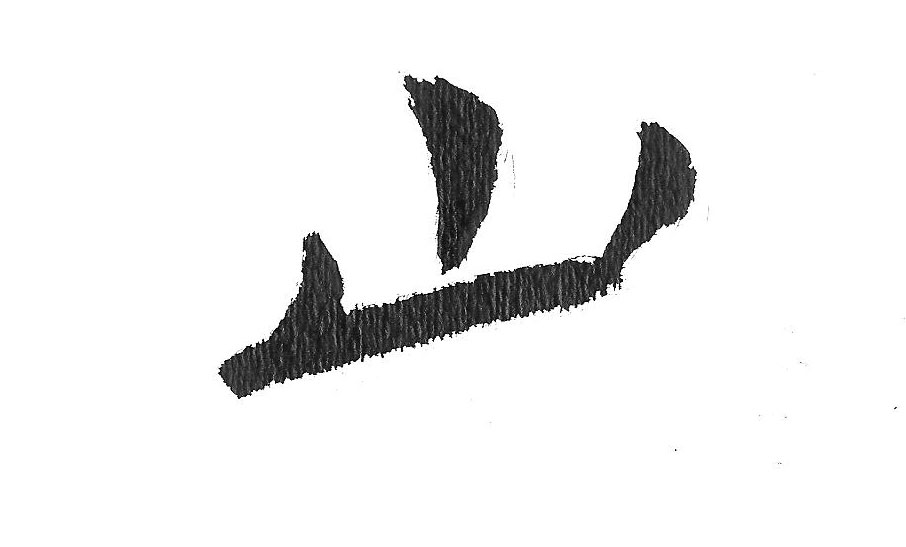
practice like a mountain

A week of playing with Dogen, the breath, and the brush.

Starting with the daunting 1171-page Treasury of the True Dharma Eye, edited by Kaz Tanahashi (Shambhala Pub 2010).  Dogen used the image of the mountain powerfully through his writings and the most familiar to us is likely the Mountains and Waters Sutra (pp. 154-164).  Another use of mountains is in an undated fascicle:

An ancient buddha said, “Mountains, rivers, and earth are born at the same moment with each person.  All buddhas of the past, present, and future are practicing together with each person.”

If we look at mountains, rivers, and earth when a person is born, this person’s birth does not seem to be bringing forth additional mountains, rivers, and earth on top of the existing ones.  Yet, the ancient buddha’s words should not be a mistake.  How should we understand this?

Dogen tends to remind me not to take things literally.  Or maybe it’s a reminder to not stop at the literal.  He goes on to say that we have no way of knowing our own beginning or ending – or anyone else’s.  Similarly, we don’t know the beginnings or endings of “mountains, rivers, and the earth.”  And here’s the hook: this not-knowing doesn’t keep us from “see(ing) the place and walk(ing) there.”  And so it is with practice, with living and with dying.