I’m deeply grateful to have a job. Certainly deeply grateful that it is rewarding on many levels despite the long and frequent commutes, the bureaucratic bs and the oft-times idiotic decisions that lead to wide-eyed surprise at the obvious SNAFU outcomes. All that notwithstanding, I’m truly grateful for time spent at home after grueling days on the road. And this weekend was not different.
Fall has settled comfortably into the valley that contains our house, the forest, and the various fauna. The colours of the maple, birch, and oak are 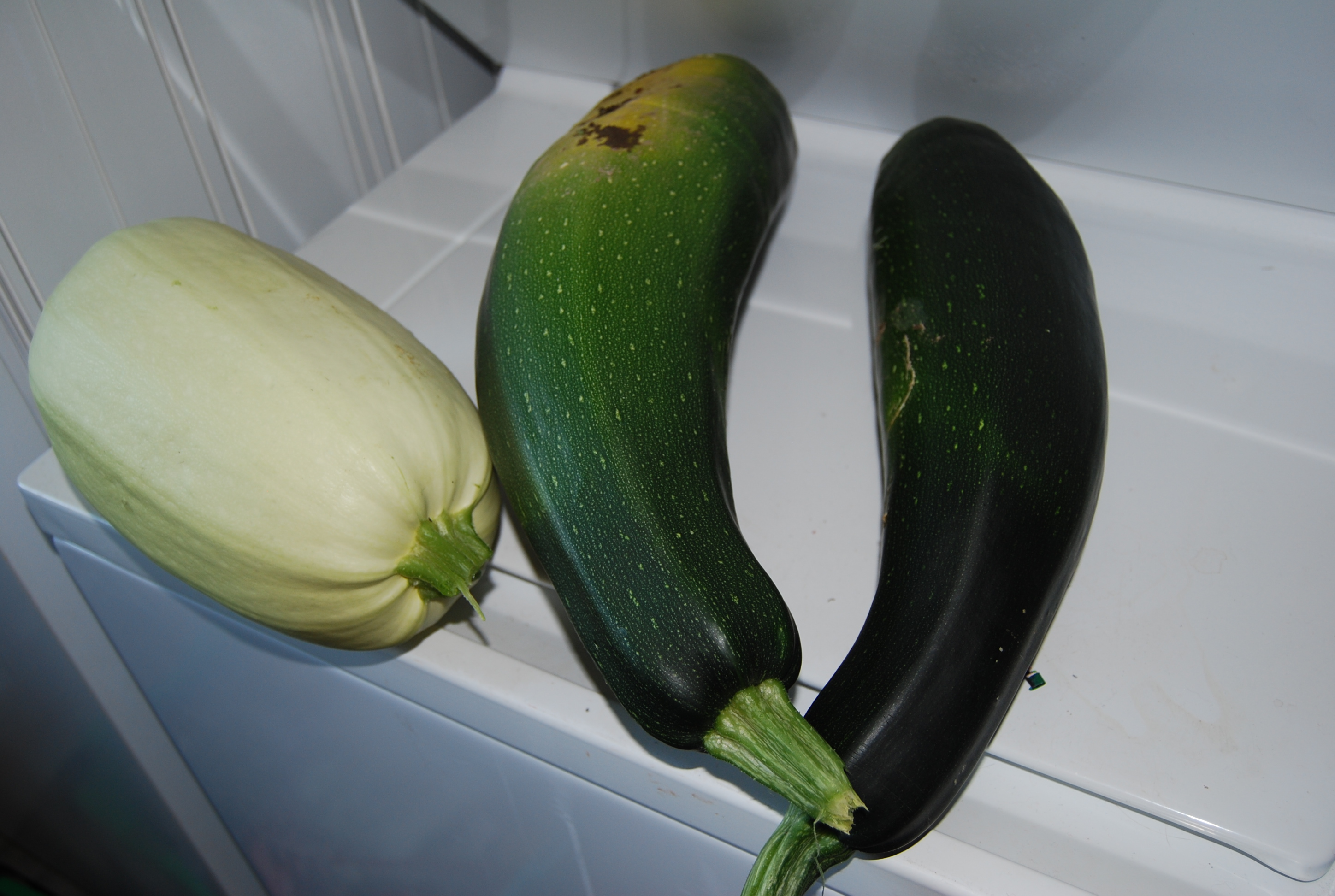 vibrant; even the unceasing misty days can’t subdue them. We are inundated with tomatoes and squash. I’ve never been successful with squash but this year there is a bounty of Spaghetti, Buttercup, Acorn, and even a late yet determined Crooked-neck. We’re usually the masked rangers sneaking around the office building leaving zucchini in waiting rooms. But not this year. There were only four; two the size of baseball bats, and two smaller ones. I’ve left one in the garden, squeezing out every microlumen of light I can for it. The other yielded about a cup of shredded delight and wisdom.
Travelling is bad for the eating habit energy. Past stories intrude into the present, derailing intentions to respect my limited lifetime and aging cardiac system. So when I get home, I try to make up for the bad karma. This time with the help of some of my somewhat unruly Facebook friends, I hit on an idea for Nutella zucchini muffins. It called for shredded zucchini. And time.
It’s an interesting concept that we have all the time in the world but never truly experience it that way. In sangha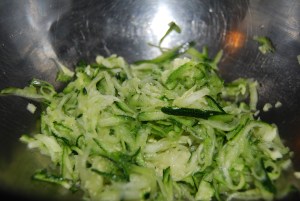 yesterday, we read from Dogen’s Uji – Time-being. It might have helped the shredding-being to “see each thing in this entire world as a moment of time.” Thankfully, the zucchini saw that as it slid cooperatively up and down the perforations in the steel plate. And then, in a moment of time, it was a small nub, forcing me to slow down. To stop. To feel the watery pulp that was still form, and yet no-form.
Practice is like that. We start full of fire and consuming everything in our path; shredding, pulping, reducing everything to what our little digestive systems can handle. And then, suddenly one day, we know enough to slow down, to stop.
And to see that there is “nothing but just this moment.”