Unknown's avatar

a metta wish for all

Bearbrook-dec2


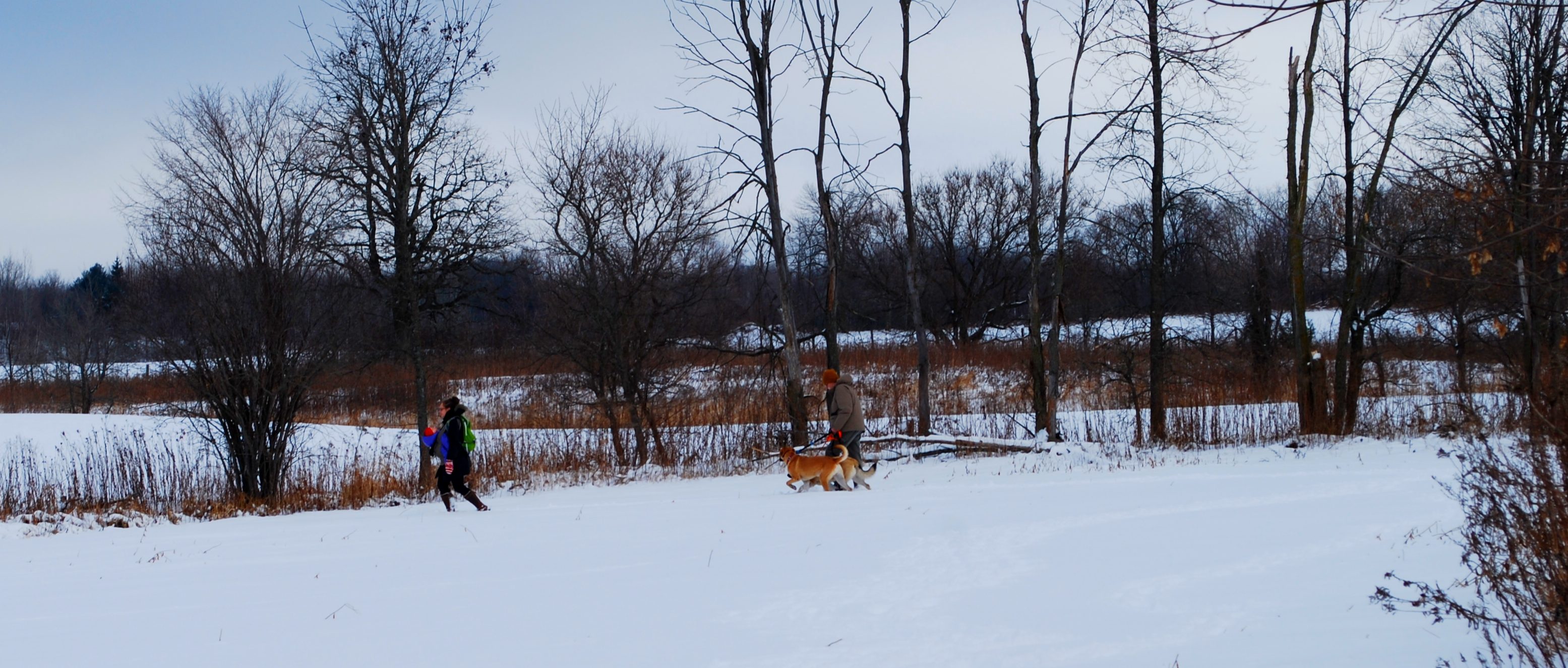
The sun is warming the snow and ice that cakes the lane way and the pups are enjoying their version of a Formula 500 race around the house. It’s quiet. Well, quiet except for the music from Songza – a recent discovery I made that takes the anxiety out of choosing music for various activities in the day and evening. It also seems to render the CDs obsolete though I’m told to stash them away until I truly want to send them along to wherever CDs go when their time is up.

Speaking of which, in teaching about the first precept I’m fond of telling people that everyone has a “best before” date. (Frank often adds, “But better after!”) Embedded in the First True Reality (Peter Harvey’s term) is the painful truth that we are not meant to be around forever. When I work with individuals with a terminal disease such as cancer, I feel a bit of a hypocrite simply because in the face of what they now know, I am still blind to my own “stale date.” Death happens as it has for a number of family members and friends since I last wrote. And those of us here remain helplessly blind to our own biological last moment.

And yet. There is also life. Grandest Baby turned one year old. Born 20 minutes short of the celebrated date of the Buddha’s enlightenment, she has been a teisho on equanimity, patience, letting go and all the other goodies we’re meant to practice. Cultivating grandmother-mind – robai shin – is an interesting practice. May I live long enough to see some buds break through these hardened branches!

Such a desire for sight, seeing, sight consciousness. I’m aware of how much that plays into our interactions. “Can you see what I’m saying?” “I can’t see my way out of this.” “See?”  In a conversation with a colleague, she asked about my paternal grandmother. Did she know, my colleague asked, the impact she had on your spiritual path?

At the entrance of our home in Rangoon on one side of the door was a statue of St. Philomena, a Christian saint with a problematic relationship with the Holy See who bounced her off the liturgical calendars in 1961 but still allows devotions to continue à la St. Patrick and St. Christopher. But such news had not reached us and my aunt in particular remained spectacularly devoted to her. Well, to the statue anyway, as she walked into the house, stood in ecstatic  prayer before it and at the conclusion would touch the saint’s eyes then her own. She believed that St. Philomena would cure her encroaching blindness from cataracts and no amount to explaining that it wasn’t in Philomena’s job description would dissuade her. Blindness, especially one that offered a forewarning of things to come, was terrifying and warranted an appeal to all saints available.

My paternal grandmother would enter the house, first dousing her cheroot in an empty oyster can Dad would leave at the door for such purposes, and turn towards the window. She would sit on her haunches with hands in prayer and shi-ko three times. The prostrations were quick and efficient with no great devotional drama. My memory of her was of an ancient elder though she was likely only (only!) in her sixties. I asked her if she was doing that because she too wanted to prevent being blind. No, she said. She knew she was already blind.

Understandably it was perplexing then. Not so now.

We are already blind. Some times we remained resolutely blind. Some times we claw at the blindness hoping to peel away the cataracts. Some times we forget we are blind and assume the rest of the world is careening around, banging into us and generally making life difficult. If only they could see!

Funny isn’t it?

Frank and I and the monstrous pups wish you all a season of enlightening joy. Our metta wish for you is that you are blinded only by the light of your wisdom, that it sears off the cataracts and you lead the rest of us mundanely blinded folk with compassion and love.
Unknown's avatar

bones of the living and dead: interbeing at the plague pits

Hey there! Have you missed me? It’s been a wonderful month beginning with a two-week jaunt to the UK where I reunited with my lovely family, met and enjoyed an out-standing day in Bristol with Justin Whitaker (who clearly enjoyed a reason to procrastinate his thesis writing), and managed to squeeze in 61km of forced marching across the City of London (UK not ON – though I have no particular aversion to the London in ON. There is a good Zen Centre there). Finally reuniting with my family after 32 years apart. How does that happen? Thirty-two years is a generation but it’s also a blink in the flash of a universe’s lightning. Still, it was lovely. Before leaving I’d had an exchange on the Shambhala Sunspace site with Jack Kornfield over a sensitive topic of indigenous practice of the Dhamma in Burma. You can read that here and Danny Fisher’s generous comments here. My intent in raising this is the conversation that flowed back channel with Jack (if I can be so familiar after 30-some emails). It reminded me of something he wrote a long time ago about his own return to family: they would like me better if I show up as a Buddha than as a Buddhist.

Important to remember when we go out into the marketplace too. Especially those rife with the bones of the living and dead.

Wandering around a city with the extensive lineage of London is a good place to do that. Doubly so when your partner has an attachment to events like plagues, cholera, and mass graves. On the surface it’s all about the Great Matter, isn’t it. Life, death and the sticky stuff in between. Digging deeper (awful but so appropriate a pun), it’s not enough to just start with life and proceed to death expecting to have some great revelation about it all. At least that’s what became very apparent as we marched off each day in search of what is delightfully called Plague Pits.

An estimated 100, 000 people died of the bubonic plague over two years and are assumed buried in various sites that were once church graveyards. With the growth and modernisation of the city, there are few actual grave sites left. But what we found at the sites we went to was far more instructive of the Dharma than the contemplation on any skeleton I’ve ever met.

Golden Square, Soho

Golden Square, Soho

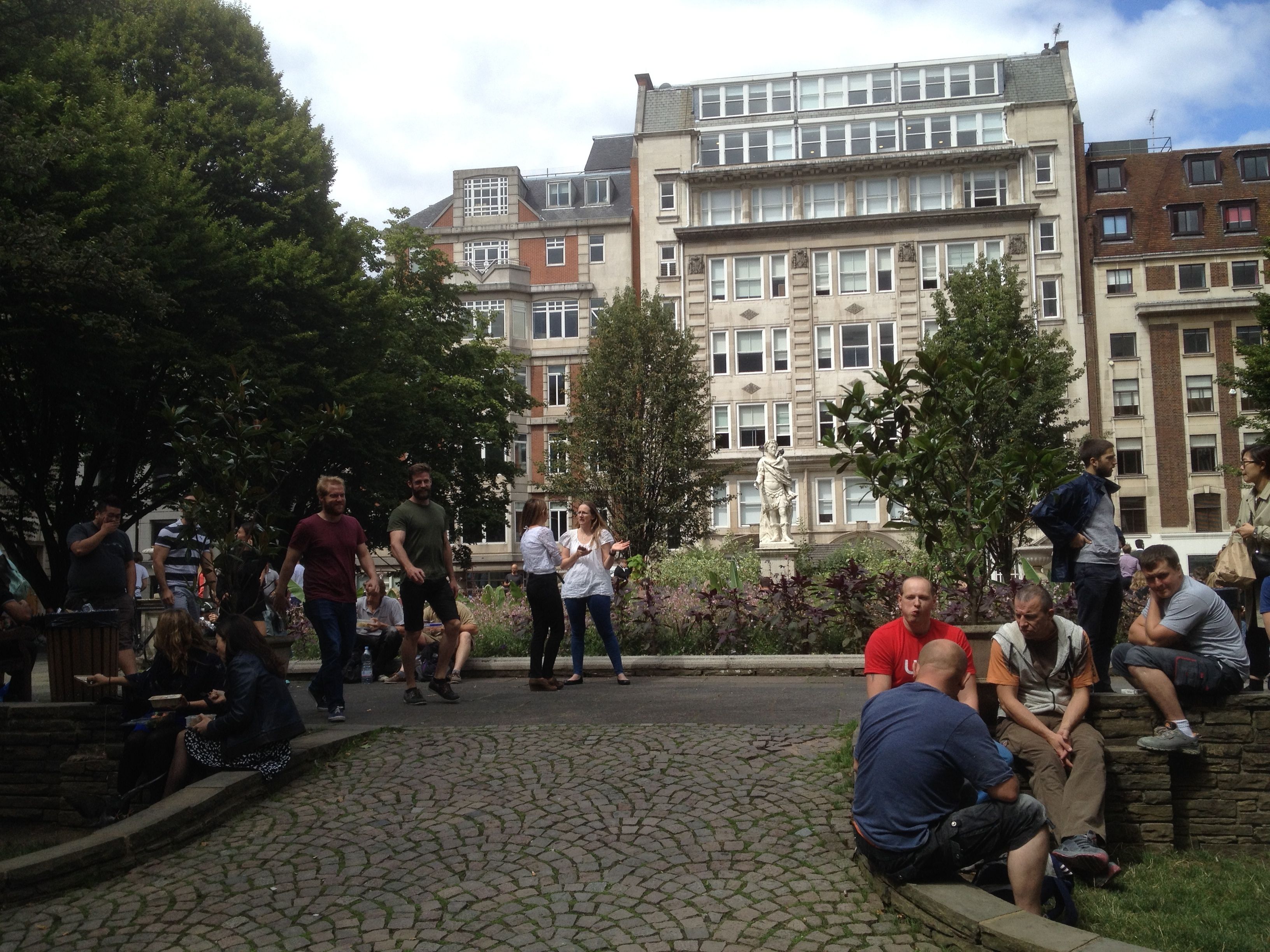
If you want to see what death looked like in the plague era, head to the Museum of London for the skeletons and a view of the archeological site. The actual plague pits sites however are more interesting for their occlusion of that very fact of death. We sat in Golden Square for a while watching the vibrant activity at lunchtime. Ping-pong games, laughter, intense conversations swirled around this rather morose statue of George II; the pigeon poop didn’t give him more rationale for the despair. I suspect George is looking across at that amazing capacity we have for delusion, ignorance of what is actually right there under our noses.

It’s not that I wanted to leap up and scream: Do you people realize you’re chowing down your take-away right over a mass grave? It was far more interesting to see the literal and symbolic array of our ability to place life over death. And, in the light of some of the readings I’ve been doing on dependent co-arising or as better named by Thich Nhat Hanh, interbeing, it helped make sense of that whole cycle from ignorance of our inner life’s process to the inevitable end of it.


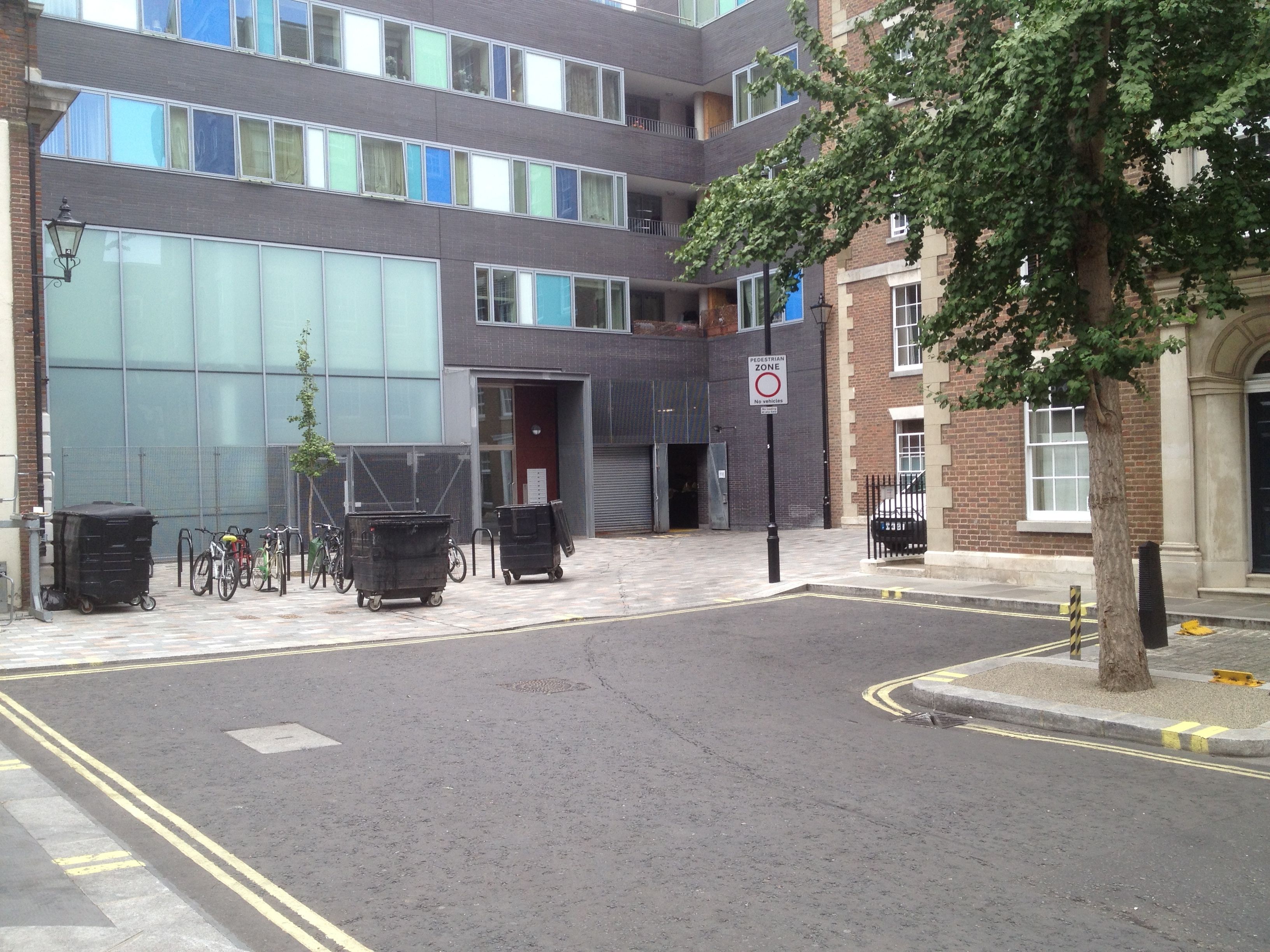
Pesthouse Close - approximate location

Pesthouse Close – approximate location

I loved the way the British used the word “rubbish.” “Oh, I’m just rubbish at that!” or “Well, he’s certainly rubbish at driving that car!” I suppose we’re all rubbish at life-the-in-between-and-death also. The rubbish bins in what would have been Pesthouse Close made that point. Interestingly, this was near Carnaby Street and the location of the “cholera pump” on Broadwick Street.

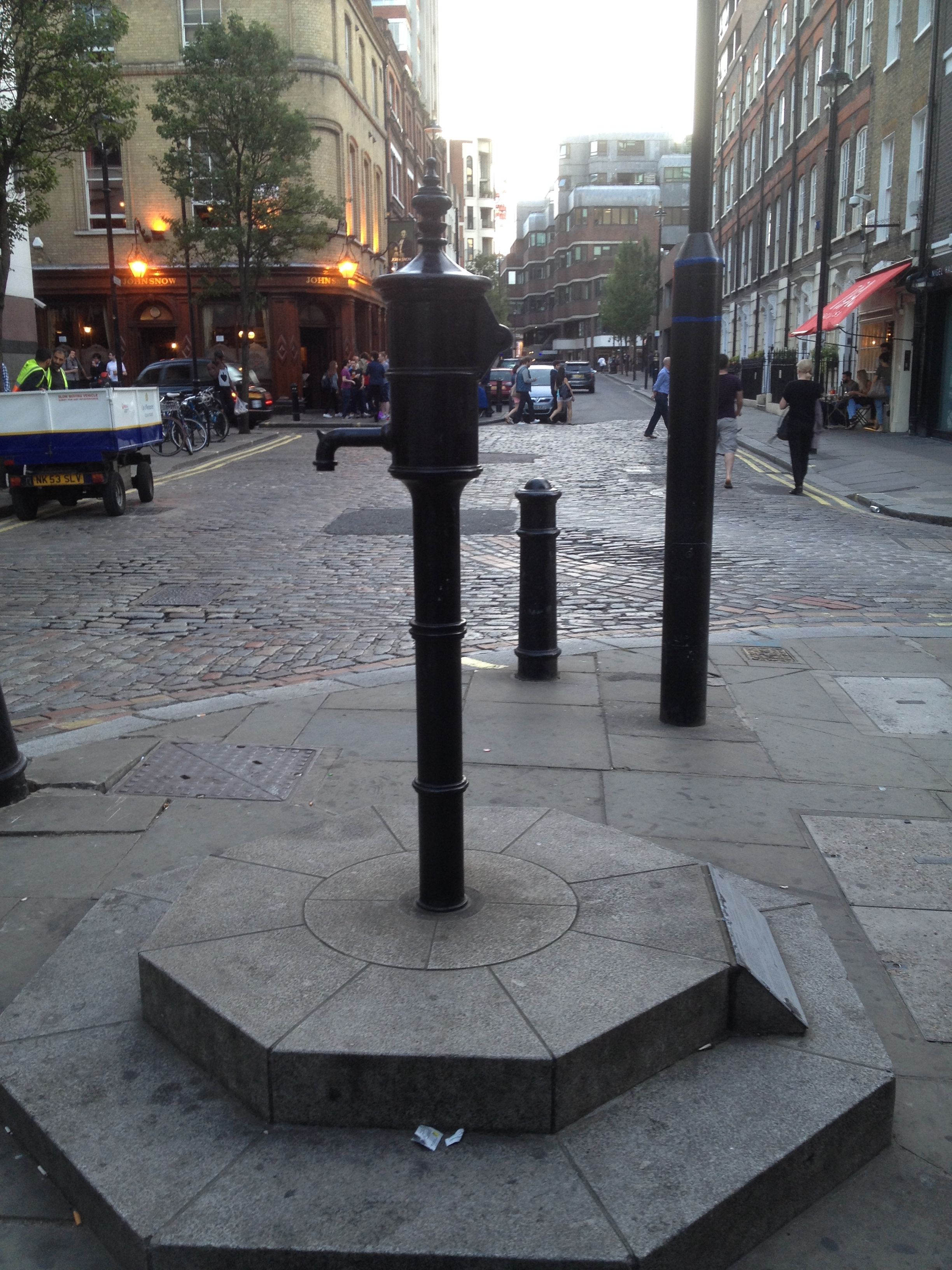
Cholera Pump

Cholera Pump


The pump was discovered to be the source of the cholera outbreak in Soho in 1854. Anesthetist John Snow traced the outbreak to this one infected water source (I guess this was one John Snow who knew something!). There’s a pub cater-corner to it called the John Snow – ironic because Snow was a vegetarian and teetotaler for a while but returned to the devil drink and meat.


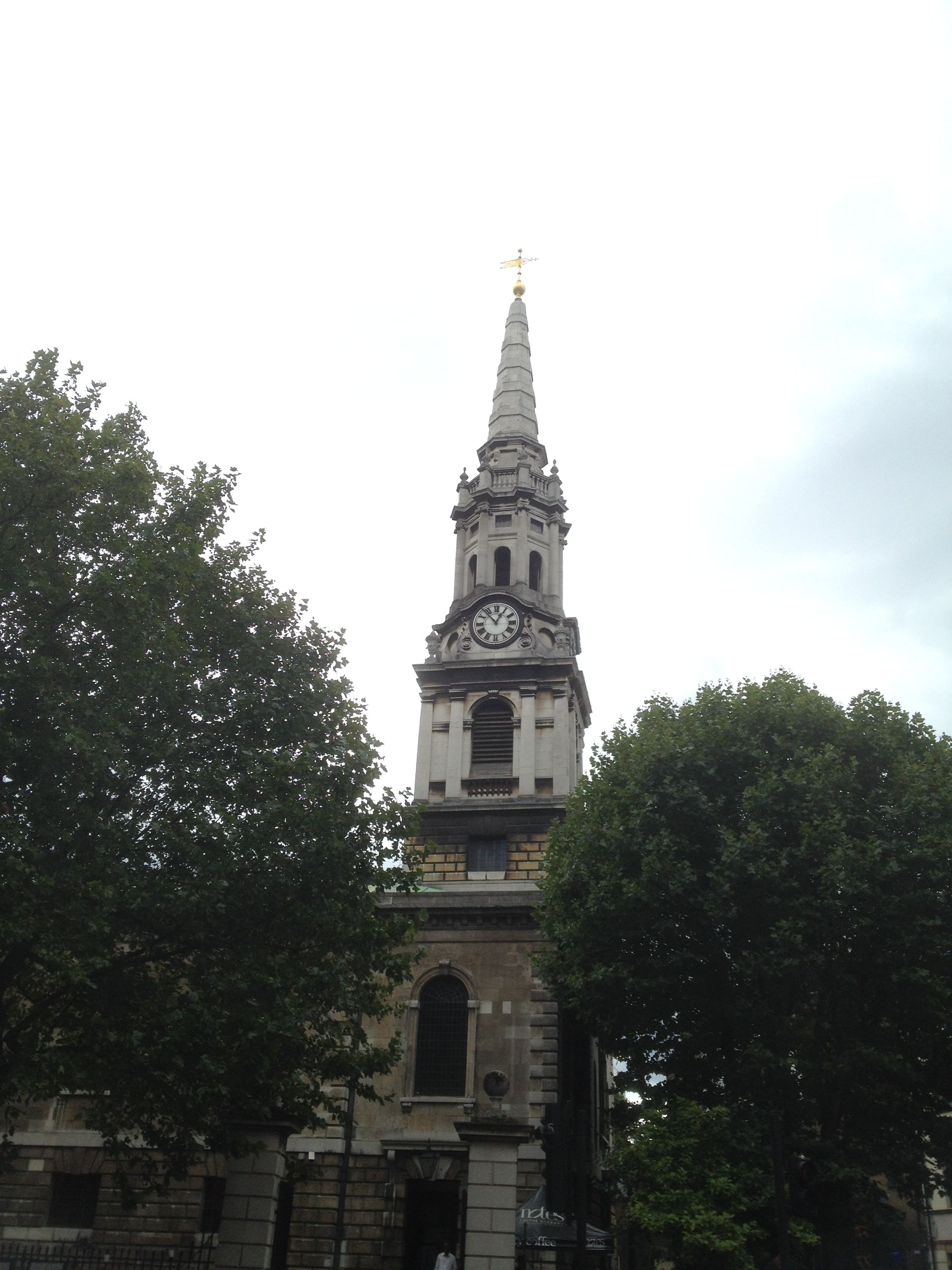
St-Giles-in-the-Fileds

St-Giles-in-the-Fileds

Somewhere tucked behind Tottenham Court Road is St.-Giles-in-the-Fields, a lovely old church where we were convinced we’d find a graveyard but not so. I imagine that as urbanisation continues we may only ever find the dead in museums or paved over by interlock. Just another form of interbeing. In fact, David McMahan, in his book The Making of Buddhist Modernism (p. 148, Kindle edition), noted this is likely “the age of inter” where we realize we inter-exist, interconnect, and interact through the inter-net. I think I like that better than any labels of this age of clinging and deconstruction.


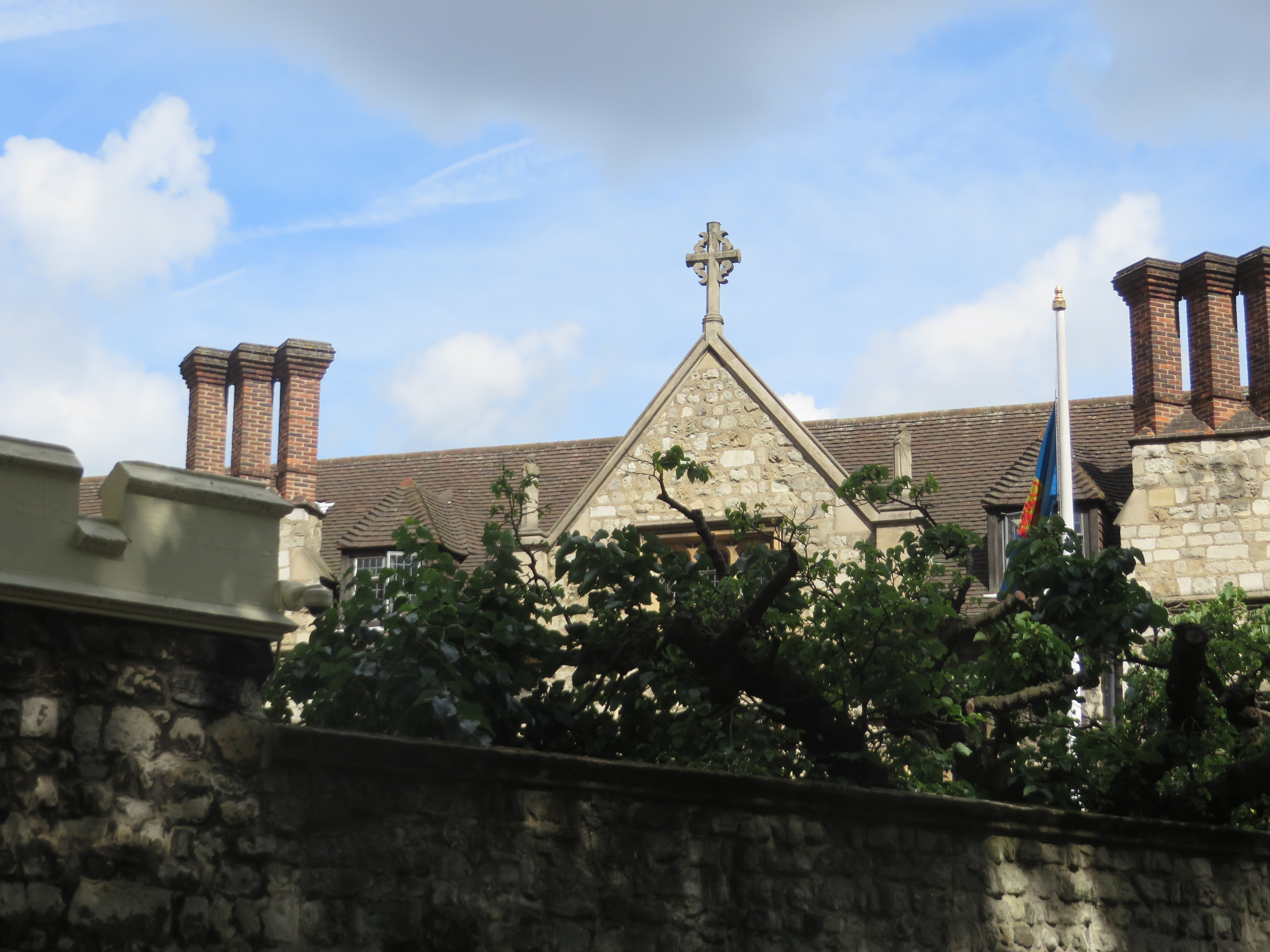
CharterhouseThe largest plague pit is at the Charterhouse in Charterhouse Square. The Charterhouse was a Carthusian monastery until the Dissolution and has been an education center and almshouse since 1611. It continues to function as a home for 40 men who might otherwise be homeless and as a healthcare facility. During the Black Death it is believed 50, 000 bodies were buried in the square – which is now a medical school.

Life, death, and life again.