Unknown's avatar

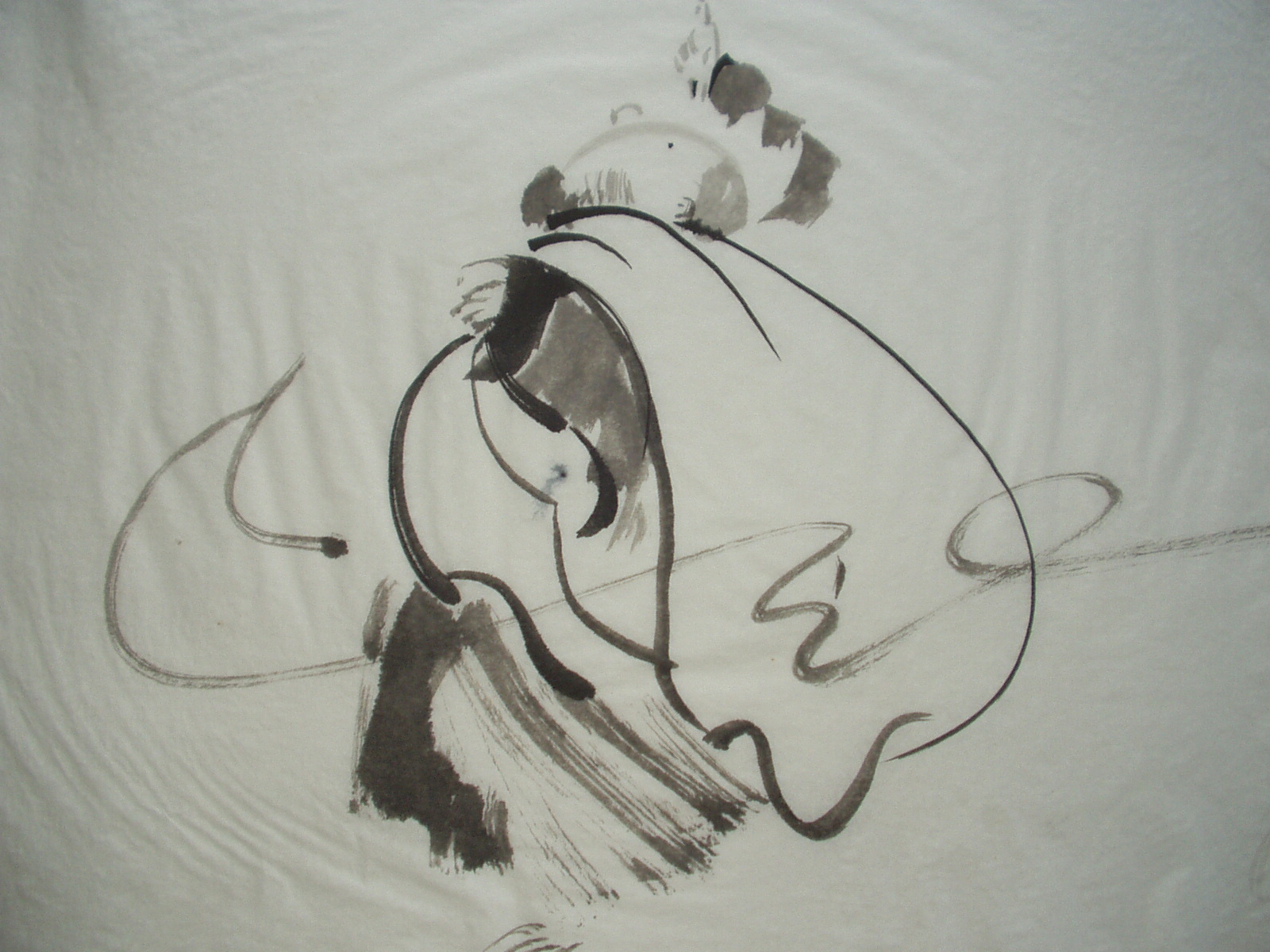
hotei’s finger

A long time ago, I wrote a paper on how psychology mismeasures being human.  I proposed that in its development of tests and assessments, it had taken the finger pointing to moon, amputated it from the body, placed it on a grid and took its measure.  From those data, we have come to believe that the feel, sound, smell, taste, sight, and concept of the disembodied finger is the totality of who we are.  And we ask endless questions about the validity and reliability of our ways of knowing what we are.

I got a C, I think.  The prof went on to teach at Harvard.  I have gone on to learn how to re-attach the finger to the Dharma Body.

There is much that is valuable in how we understand the world from what philosophy, psychology, sociology and all the ologies have contributed.  Still, sometimes, I try to remember that what we know is, of necessity, disembodied from the core of who we are.

So, when I see a finger pointing, I remember it is not about finger or moon; it is about orienting myself in a direction.  I follow the finger back, not up and outward into nothingness – back into the hand, arm, shoulder, heart, gut, legs and feet.  Then in reverse to the fingertip.  And, like the needle of a compass, I point in the direction of my path grounded in what I am.

A (modified) story from The Moon Appears When the Water is Still by Ian McCrorie:

Two teachers argued long about the true path, authentic texts, pure Dhamma.  A servant boy served them tea.

“And what do you do here?” asked one of the learned monks.

“I serve tea,” answered the boy.

“Where are you from?”

“Here.”

“When did you start work?”

“Now.”   The boy bowed and left.

“Perhaps,” said the monk,

“It is we guides who need to observe one such as this

whom we hope to guide for he understands more clearly than us that

the truth is not seeking more answers

but asking fewer questions.”

Thank you practicing,

Genju
Unknown's avatar

last being

There’s an old saying, “The poor farmer makes weeds, the mediocre one makes crops, and the skilled farmer makes soil.”

from Opening the Hand of Thought by Kosho Uchiyama

Not being last has become a deep question for me.  I haven’t fully grasped it or refined my thinking into it.  Just a warning that this post is a working on progress.

Growing up I had a sense that there were two categories which measured performance: First and the Rest.  Later I was taught to say supportive things like, “Well, if you’re going to be last, be the Best Last!”  I don’t think the kids to whom I imparted that piece of useless wisdom bought it because… frankly, kids are good at spotting a BSBB… bullshit brain baffler.

Not being last has been a driving force for me in my career, my limpid athletic endeavours, everything.  Then some unknown time ago, I began to feel this drivenness more as a puzzle than an imperative.

Standing at the early-registration table for a conference on mindfulness, I was jostled aside by another registrant who indicated she had got there first.  I smiled and said, “It’s ok.  As long as we’re not the last.”

“If you’re going to be last, then be the best last,” she responded sharply.

Never one to resist a teaching moment or a red cape, I snorted oxishly, “There’s only four of us here.  If we were the last, what would happen to this conference?”

Kyle responded to the initiating post on this topic, Only when we see ourselves as seperate (sic) from first and last do first and last occur. First and last are no different.

Perhaps.  In historic reality, first and last are distinctly – extinctly – different.  There are consequences to being last.  I think about the Do-Do bird.  The dinosaurs.  The recent extinct species in North America.  What made them the last of their kind?  In the race to survival, what failed for them?

The answer might be as simple as the fact that something didn’t get passed on.  Some crucial factor or teaching about adaptation wasn’t cultivated.  All beings are vulnerable to this system failure.  I suspect, even Bodhisattvas are capable of becoming the last being.

So, in that first moment of our Bodhisattva-hood, what is required of us to not be the last?

Thank you for practicing.

Genju

with thanks to Zendotstudio for reminding me to return to Uchiyama.