Unknown's avatar

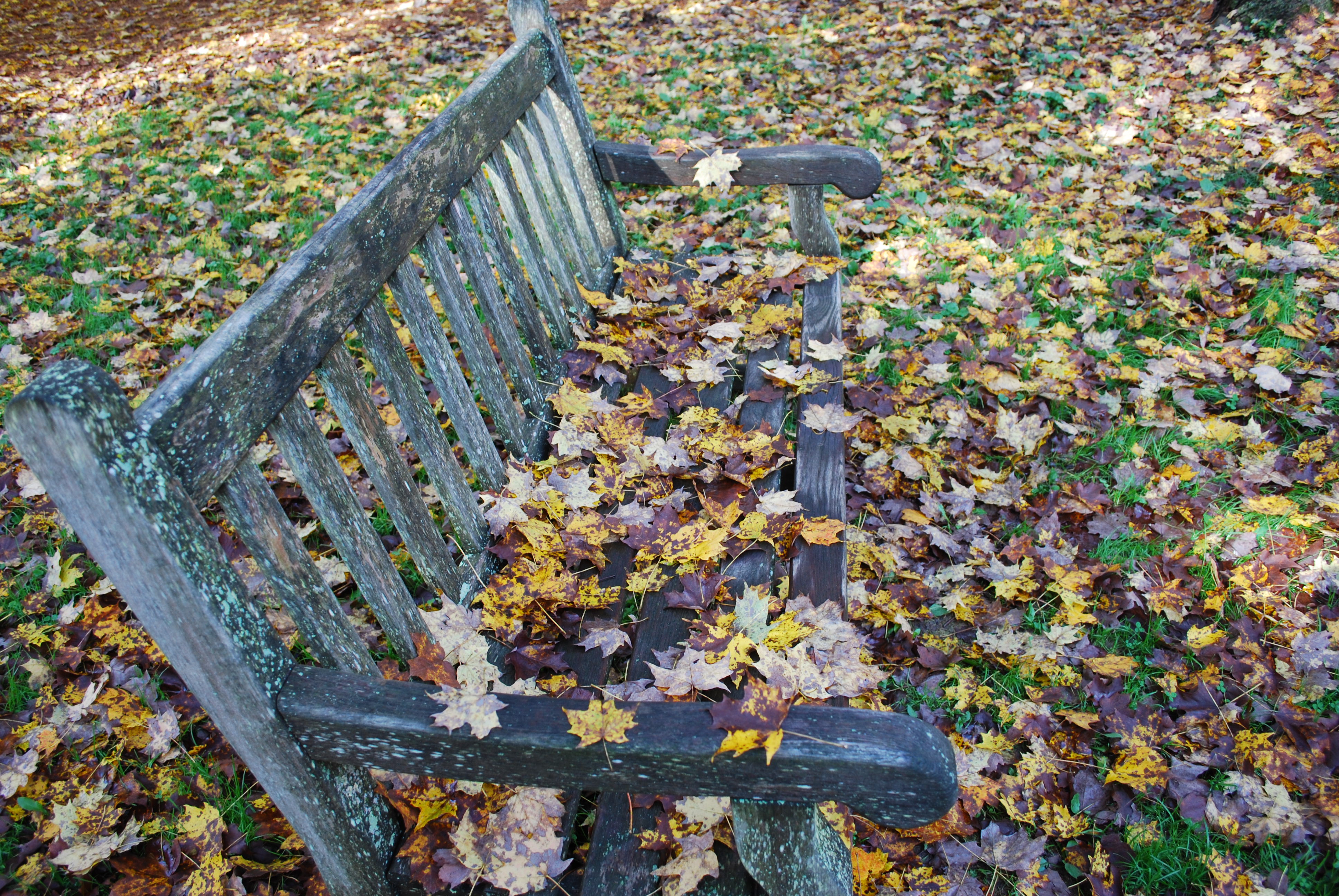
handful of leaves

Last week, I spent 5 days at the Omega Institute learning about mindful self-compassion.  The potential redundancy of the topic title and the nuances of dharma may chafe a bit but it does point to the current trend in turning Buddhist psychological concepts into therapeutic processes.  That’s not a bad thing because given what interventions actually work and the paradigm shift we need so we can improve as therapists, another approach would be a Godsend… or Buddhasend in this case.  In fact, when done right (read: commitment to training on the part of the therapist), there is no greater accountability than that for a professional who has to test the medicine before administering it.  And what medicine it is!

The Buddha said that what he had taught was a handful of leaves in comparison to the numerous leaves in the simsapa forest.  In the Simsapa Sutta, he explained that what he had not taught was irrelevant because 

… they are not connected with the goal, do not relate to the rudiments of the holy life, and do not lead to disenchantment, to dispassion, to cessation, to calm, to direct knowledge, to self-awakening, to Unbinding. That is why I have not taught them.

The Buddha went on to say that he taught one and only one thing: suffering and the end of suffering.

A few things about this sutra have bothered me for a long time.  First, why the heck would he avoid teaching something because it did not lead to suffering*?  By inference, it means some of the things he taught opened us to suffering – which, of course, is what he said.  Second, in my pea-brained head what he taught has always been two things: (1) suffering and (2) the end of suffering.

Somewhere in the week of the retreat/training, I had a chance to walk with a dear dharma sibling.  As we discussed the intricacies of what the Buddha taught (and didn’t teach), I wondered out loud why suffering never seemed to cease.  Why was it that each time we drilled down into that deep gut somewhere under the hara, we reliably struck the oily, thick, black smoke of ancient twisted karma?  We talked some more about this “walk of disillusion” we often take as practitioners, this path of disenchantment, grief, and sorrow that we mistake for an obstacle to our progress.  Stopping under a towering tree (close as we can get to a simsapa forest), I chuckled with the realization that perhaps we had become experts in drilling for suffering.  Perhaps we only found suffering each time because that precisely was what we drilled for at every sitting.   Perhaps it was time to hang up that dowsing rod and turn to something more balancing.

I can’t think of a better argument for a practice of love; not just compassion but also lovingkindness, equanimity and joy.    The fourfold practice that warms and opens the heart.  And ends suffering.

So the Buddha did teach one and only one thing.  Our practice is not only about the origins of suffering and the defilements that cause them.  It is equally and likely even simultaneously about the cessation of suffering through the practice of warming the heart so it can open and not fear being broken.

_____________

*The Buddha’s teaching are not simply an exercise in intellectual exploration of suffering.  In order to understanding suffering, we first need to open to it in the body, experiencing the very sensations we struggle against and strive to avoid at all costs.  So paradoxically, his teachings lead us directly to suffering because that is the only route out of this tangled mess born of craving, hatred, and ignorance.

Unknown's avatar

the practice of stuckness

Tomorrow is the Harvest Moon.  It’s also known as the Fruit Moon which prompts the question: what have been the fruits of our practice?  What will we gather together with the intention that it nourish us through the cold, dark nights ahead?  If the state of my life at this point is any indication of my stewardship of my spiritual ground, I’d say winter holds promise of a meager diet.  Where did the time go?  What happened to the plantings of six months ago?

Not only has the wild heat of the Summer been unforgiving of the vegetable and flower gardens, this inner heat of dissatisfaction has left me parched in my practice.  It could be a good thing, I suppose: an opportunity to see the places where my character fractures and edges where my ego curls up and withers.  The fact that I don’t like it is irrelevant because once the whole ball of self-reflection and intense scrutiny gets rolling, there’s not much that will stop it.  And the universe helps it along too.

You remember Sprout who pounced his way into our home, leaving a trail of mashed houseplants and mangled Beanie Babies.  He’s now a year old and thriving.

Meet his doppelgänger, Mystery formerly known as No Name.

I came home one Friday evening to find Sprout unusually needy of attention.  His security blanket, Frank, had been away for a few a days and I reframed his utilitarian affections for me as an opportunity to bond.  Apparently, the practice of equanimity was bearing fruit, transforming the typical bitterness I feel about feline fickleness.  And then I wondered if I was having a spiritual emergency when I saw two Sprouts at my feet, asking to be picked up.  It took a moment, a fascinating moment during which I physically felt my brain trying to make the two one, forcing my eyes to reset to a previous configuration.  One not two.

Sadly, though not for No Name, truth always vanquishes delusion.  And now we are left with a mystery, not just about the cat but the manner in which she got into the house and took up residence.  But reside she will, and preside over the reconfiguration of four cats, two litter boxes, and a deferment of my long-desired rescue dog.  The practice of letting go is getting a workout too.

On the bookish front, I’m blessed with two amazing books.  The Existential Buddhist, Seth Segall’s Encountering Buddhism: Western Psychology and Buddhist Teachings is a tour de force of 9 essays bringing together the Dharma and Western perspectives of mental health.  I had it set for review in October but Frank has absconded with it which reminds me to deepen my practice of generosity and also lock away my new purchases.  The second is by Practice of Zen blogger, Ben Howard: Entering Zen, a collection of Ben’s writings that are always a delight and a deep teaching.  The few chapters I’ve read remind me that there is power in a practice that is softly open and that some things crumble and collapse despite being well-placed and useful at the time of planting.  The third book is a bit of a curiosity called The Heart Attack Sutra by Karl Brunnhölzl.  I have no memory of purchasing this; like Mystery, it seemed to just show up – about the time I was considering cancelling my echo cardiogram and stress echo test because my practice of remembering my mortality doesn’t include fuzzy pictures of a pulsing heart.  (Actually, seeing my heart beat in real-time has to be one of the most profound moments of deep meditation I have ever experienced!)

So.  Yes.  Practice has been a struggle over the last months.  And yet, and yet I know this is precisely the form and purpose of practice: to sit with this discomfort of things out of rhythm and without rhyme.  Dukkha at its most seductive tells us to move away from this stuckness, insists there are more important things to do, critical time that cannot be wasted.  And that is the precise moment to turn into the vast emptiness of practice.