

 Addiss & Seo continue with the second characteristic of Japanese art. It is the “ability to borrow and transform features for the arts of other countries. Successive waves of influence from China and Korea brought to Japan Buddhism, a written language, and new forms of government, as well as different styles of art.” This capacity to contain anything and allow time to work on it gives Japanese art its enduring quality as well as its infinite variety. Addiss & Seo point out that a less confident culture may have submitted to the influx of new ways, becoming mere echoes of the original. Japanese culture however emerged from the waves of external influence to offer a unique perspective.
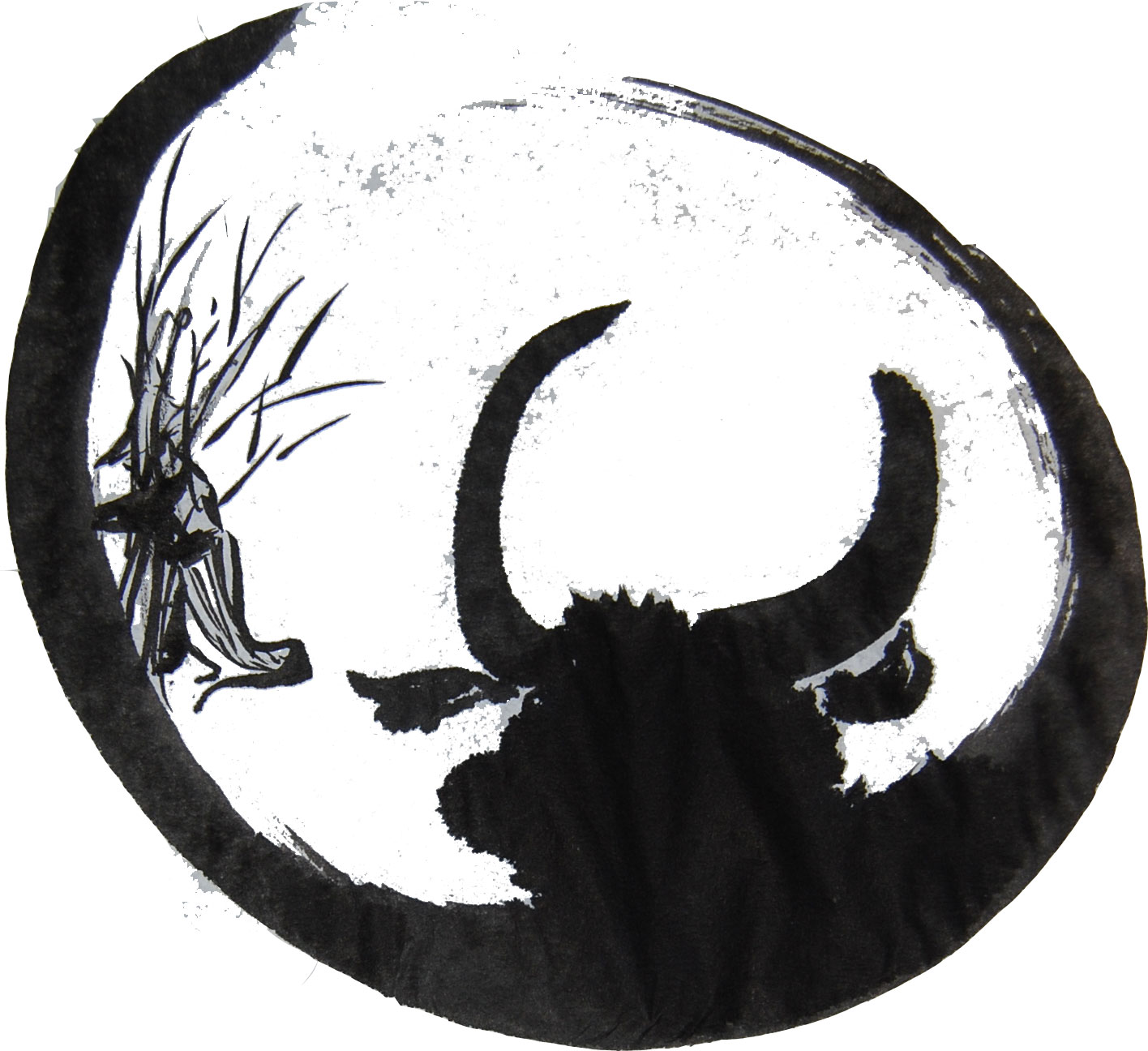
Practice is enriched when I can transform what is given into an embodied process. At the same time it needs to hold the elements of the original. Perhaps that is the beginning of discernment. Or perhaps it is too much below awareness to be tracked. The ox was insistent on this point. It is compelled to step out of its stereotype as destroyer of China shops. It longs for the relational but that requires an openness on my part. I have to be willing to be forged into something new, be open to what emerges from our connection.
If our untamed nature is the gift, what might happen if we surrendered without submitting?
Thank you for practising,
Genju
Tomorrow: Fearless asymmetry
 108zenbooks