Unknown's avatar

the blindest

The Sound of One Hand: Paintings and calligraphy by Zen Master Hakuin (by Audrey Yoshiko Seo and Stephen Addiss; Shambhala Press) is the companion gallery book to the Hakuin exhibition currently showing at the Japan Society in New York City.  It begins with a biography of Hakuin and then launches into the Zen Master’s wide-reaching influence on the development of Rinzai Zen in Japan.  Over the last few weeks, I’ve been devouring as many books on Hakuin as I can find.  Wild Ivy, translated beautifully by Norman Waddell, The Religious Art of Zen Master Hakuin by Katsuhiro Yoshizawa, various sections of Stephen Addiss’ voluminous works on Zen masters and their art all come together in The Sound of One Hand.  This week, I’d like to share, with little interference in or elaboration of, the gems glittering through the layers of scholarship which show off not only the Dharma but Seo and Addiss at their best.

In keeping with the season of ghosts & goblins, Hakuin’s scroll Goblin offered an insight into the bizarre logic our fears can take on.  The scroll shows a one-eyed goblin meeting a blind man who calls out:

Who’s that gr-gr-growling over there?
What?  A one-eyed goblin?
I’m not afraid of you –
Since I have no eyes at all,
You should be scared of me!

Bet you didn’t think of that.

Of course, it’s also true that there are truly scary forms of blindness beyond the literal.

Thank you for practising,

Genju

Remember the Hakuin exhibition at the Japan Society in New York and other venues!
Unknown's avatar

how to look

In preparing for our trip to the Hakuin exhibit in NYC, I’ve re-visited Stephen Addiss and Audrey Seo’s lovely book How to Look at Japanese Art.  Before dropping into their typical intense scholarly style of explaining everything from ceramic to ink art, Addiss and Seo examine the nature of Japanese art that sets it apart and makes it enduring as an art form.  There are four characteristics that typify Japanese art and in reading about them, it seems these are also four characteristics of practice.  I’m not surprised that reading about the nature of one form resonates with the nature of True Form.

The first characteristic of Japanese art is a “deep understanding and respect for nature, including human nature.  This appears in subject matter – such as birds and flowers, landscapes, or human figures in daily activity – and it is also apparent in artistic approach.”  Not enough to simply hold the object of art in esteem, Japanese art forms drop into the heart of the object with reverence.  The form and texture of clay, wood, paper, ink, brush are all part of the final completed work.

Examining my practice through this lens, I’m challenged to hold every aspect of practice with respect, especially my very human nature that tends to derail it regularly.  In the metaphor of brushwork, my nature is the unruly brush that refuses to pick up a sufficient reservoir of ink in its hair and can only splatter illusions across the paper.  As I stagger along this route, I’m constantly amazed by the delusional mind;  how self-serving, how willing to latch onto the shards of information that allow me to hold onto to those things that support my greed, aversion, and ignorance.

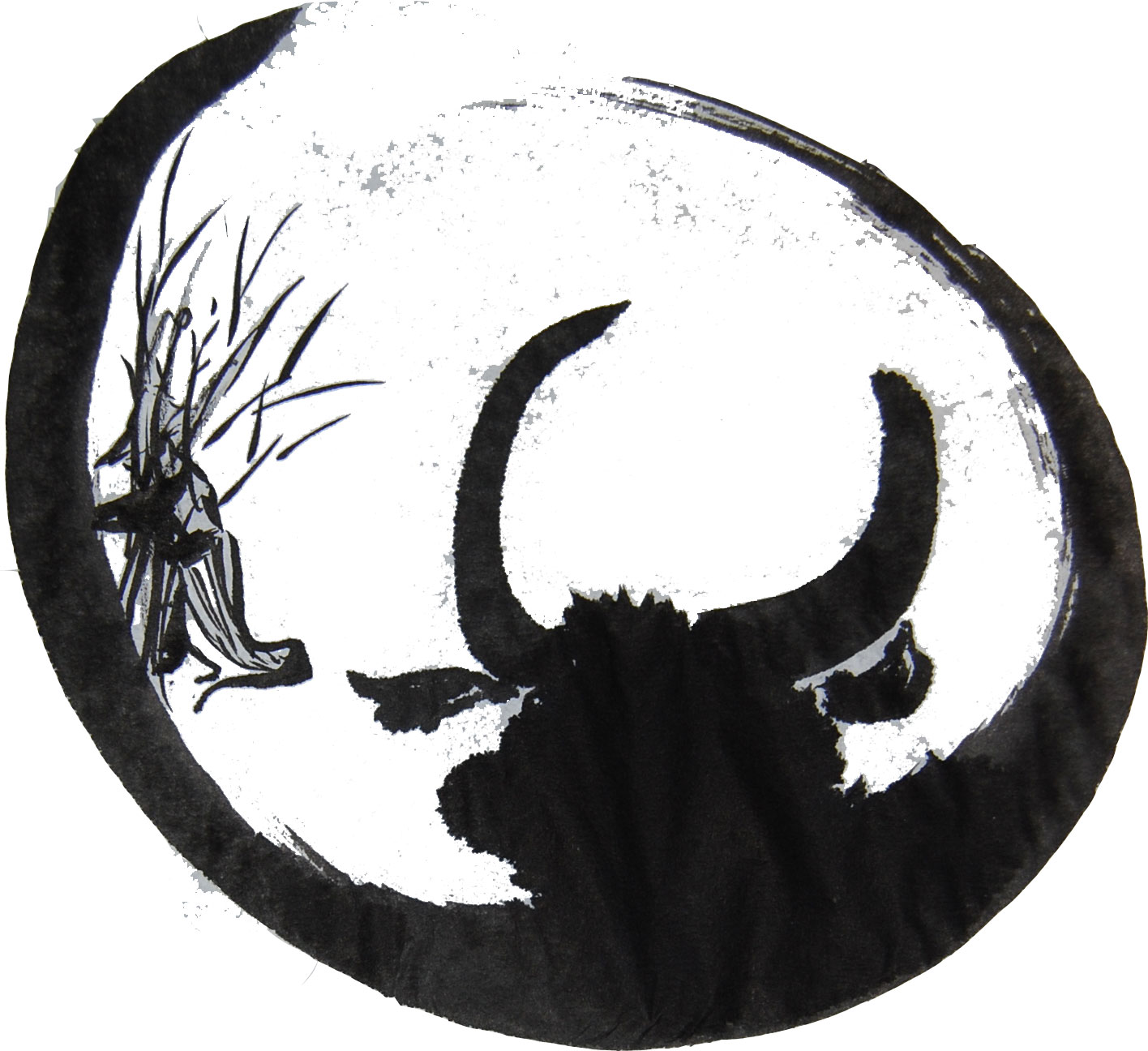
Now I’m wondering: what if my work is not to save myself from my Self but rather to love it?  What if I simply hold my delusional mind with respect for what it is?  What if that pesky ox who keeps revisiting my art table decided to turn and meet its herder with a “deep understanding and respect?”

What might happen then?

Thank you for practising,

Genju

Tomorrow: Transforming what is given