

 The final role in Karpman’s Triangle is that of the Rescuer, a role which is the bane of my existence. In fact, it might well be the bane of all our existences, past and present. The intent of the Rescuer is not different from that of a Bodhisattva – save all beings from suffering. We evoke images of Avalokiteshvara with her 10,000 arms and selfless aspiration to defer Nirvana until all beings are liberated. The other Bodhisattva (and perhaps a more realistic model of one) is Jizo who enters the hell realms and simply opens his sleeves so those who wish to leave the hell realm with him can catch a ride.
Pain is inevitable. Suffering is optional. Salvation is voluntary.
Being in Rescuer mode, however, encourages the belief that hauling beings out of the jaws of disaster is not voluntary – for myself or the one suffering. I get stuck in believing that I must (and only I can) act swiftly and heroically to carry the person away from their tragic circumstances. Not only does this diminish the power of the person involved but it exhausts me. I probably come by it honestly, having lived my life in thrall to men in tragic poses. Frank is kind in pointing out that the objects of my misguided rescuing is not gender specific; apparently I have a propensity to rescue all manner of beings. On the funny side, the farm’s inhabitants do attest to that. On the painful side, the many hours spent driving, flying, traversing the continent, working long hours attest to an unmodulated Rescuer-role. And I know better.
I am blessed with friends who trust me with their difficulties. The blessing is not just the trust but that it gives me opportunity to observe my unskilfulness! As they tell their story of stuckness and confusion, I notice my body contracting like a superhero about to lift off. Fearful for them, I try to carry them out of their situation with interruptions, interpretations, suggestions, and even confrontations. If my friend is strong in his own grounding, he’ll likely ask me to shut up and just listen. If my friend is caught in her own victimhood, she’ll likely cling harder and heavier. The problem with my rescuing attempts is not just that they are ineffective in truly helping but that I end up angry or resentful when the advice or exhortations are not accepted. In end, we all fall down, suffering.
When someone is in pain, it is natural to want that pain gone. And that desire is directly proportional to the intimacy we feel with the person. Our responses are likely to be impulsive and, despite the appearance of being other-centered, are self-motivated. However, because there’s a fine line between rescuing and persecuting, we run the risk of pendulating between these two states rather than bringing resources to the situation. Our desire for an outcome blinds us to fact that it is the uncertainty of the situation that is driving the system. Yet, the shift from rescuing so that we all can avoid the pain to being willing to sit with the uncertainty of what could happen itself can elicit lots of anxiety.
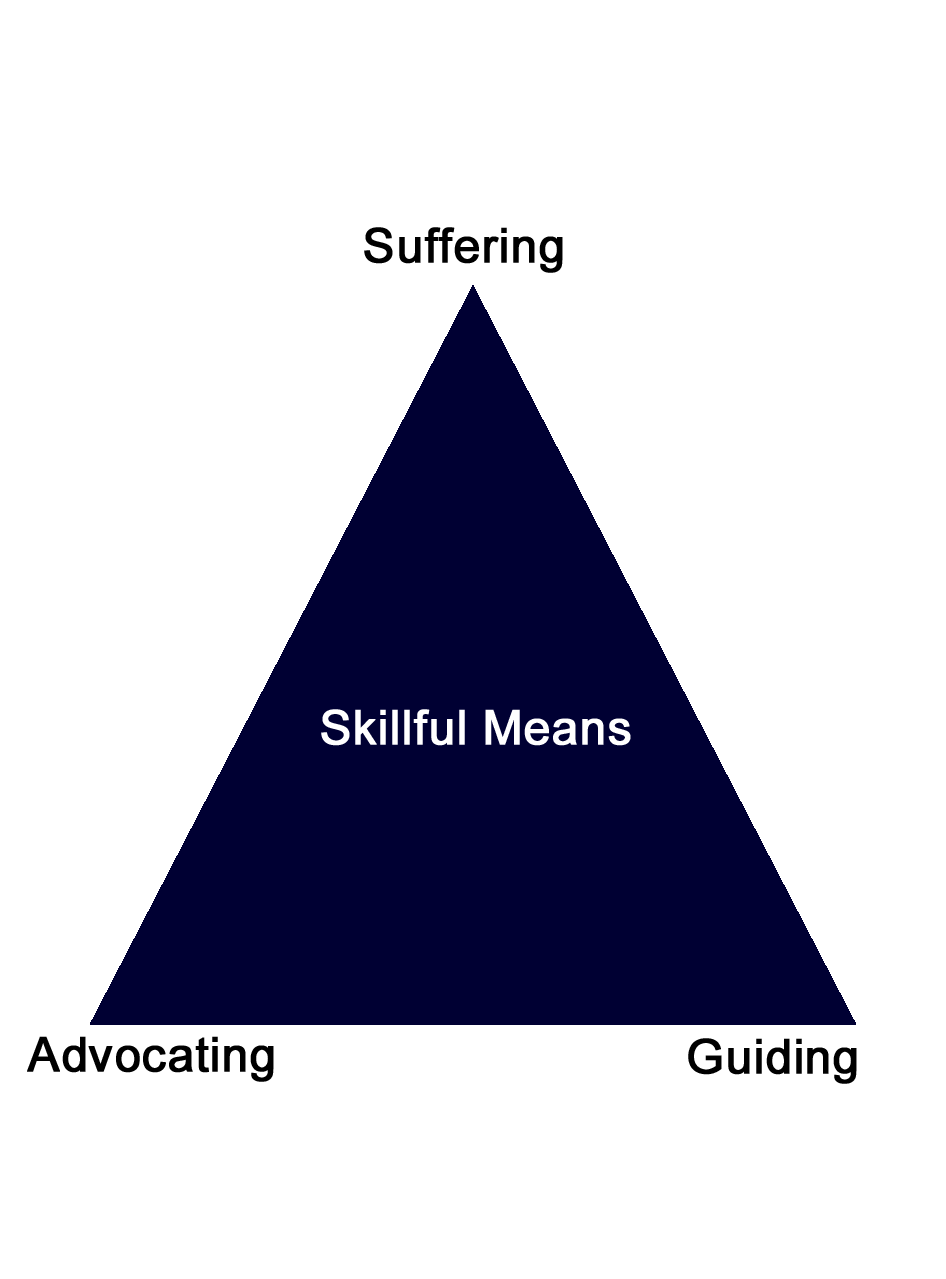
The Zen Peacemakers Tenet of Not Knowing is the foreground practice for transforming the Rescuer. By practising a willingness to be with what is and temper the mentally generated catastrophes, we shift from Superheroes to Guiding the process if called to do so. This mode of being present is hard for me. The high energy and desire to keep a safeness in and around all beings is overpowering. And, of course, I’m just not good with uncertainty. But rescuing has brought me to my knees with burn out and depression many times in my life and it’s definitely not a path I want to tread any more – or can. The commitment for me has to be with resting in Not Knowing, Bearing Witness to my discomfort, Acting Compassionately. Only then can I be fully present and walk in partnership with all those I love.
As Barry pointed out in the response to the first of these posts, we can only respond when we have a felt sense of our own Victim-Persecutor-Rescuer experiences. Similarly, we cannot teach the Three Tenets to Victims-Persecutors-Rescuers directly. I think we can only embody Bearing Witness-Compassionate Action-Not Knowing and by doing so change the dynamic because we erase the fixed-role of any one of the points on the triangle.
Thank you for practising,
Genju
 108zenbooks