

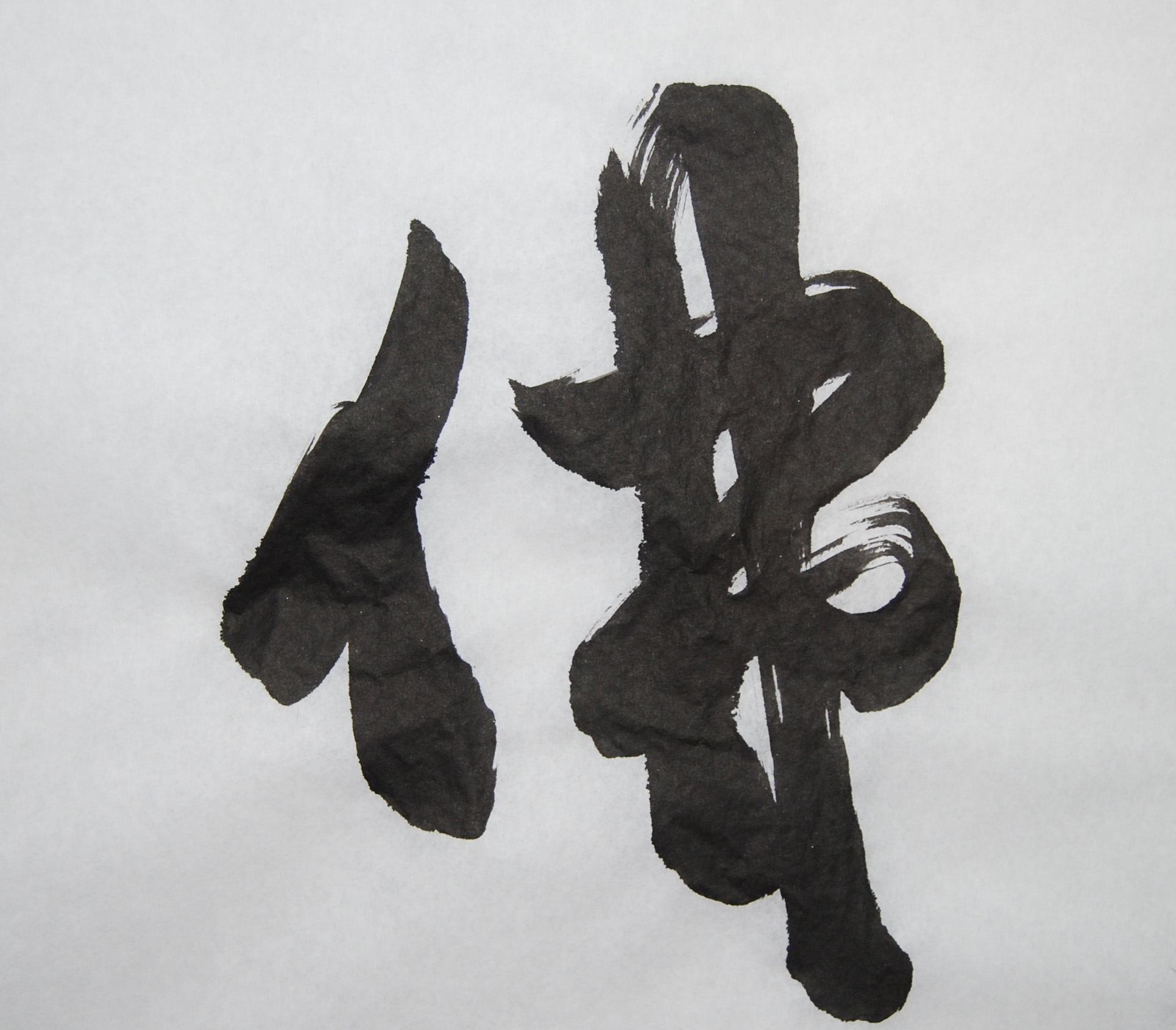
 I woke up (I wish!) with a silly refrain in my head: 99 Buddhas on the wall, 99 more to go. Take one down, pass it around… 98 more to go…
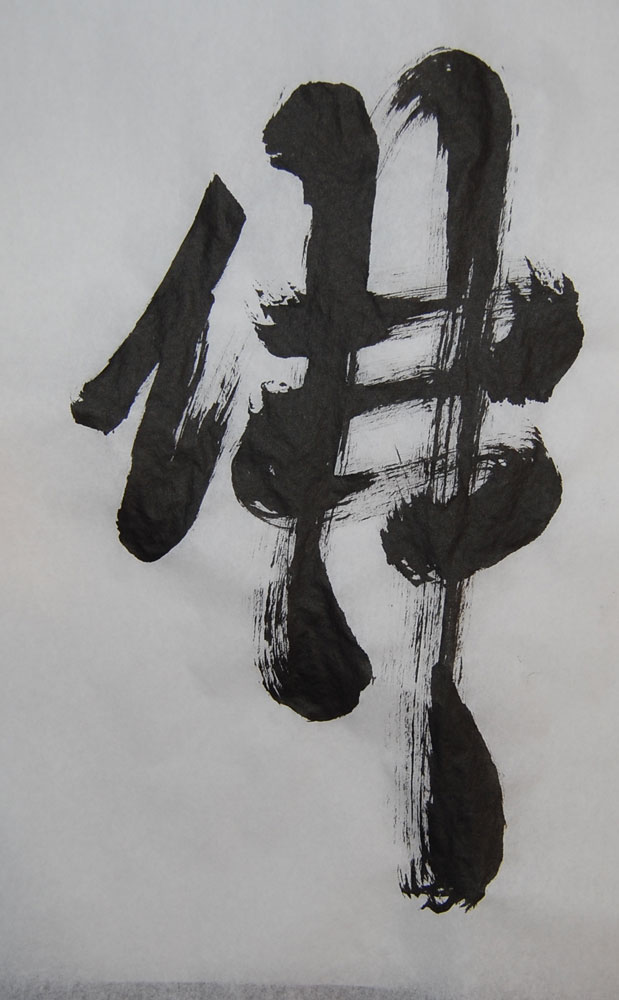
So far, my commitment to creating 108 Buddha calligraphies is bringing up interesting issues about practice. This is Buddha9 which means my brain was doing some strange arithmetic as I was sleeping. There really are 99 more to do. Or maybe that’s the pointy-end of practice for me. There are no more to do except that I think there are. But that’s important too. The practice of Zen is about not doing which, in the Ourobouros of Zen, is about noticing what the doing is. What I notice when I get the brush and ink ready is all the arising hope that this one line will define the direction of who I can be, will shape the container of my joys and pain. That’s a lot ask from masticated fibers, a patch of horse hair bound in a wooden handle and a concoction of pigment and glue. Honestly, what am I thinking!
And therein lies the problem. The Thinking Brain comes online and the next thing I know there is this mound of crumpled “not-good-enough’s” on the floor. Practice with these Buddhas has become watching that Thinking Brain and with gentleness, escorting it to the mental couch where it can rest. What research there is on burn out and trauma shows that recovery is in allowing different parts of the brain to come out and play. But there’s no wisdom in waiting until burn out happens. I like to see each Buddha that pours out of the brush as a buffer or a deposit in the bank of resilience. Allowing each one to be just what it is without judgement of the line, balance, composition or anything contrived is tough – and the pokey part of practice.
Dealing with loss and grief is not much different. I’ve never lost a child, but in walking with parents who have, the depth of that pain seems insurmountable. And yet, and yet, they go on. What I’ve learned from these amazing teachers is that in my pain what I want most is for it to be different – and by that I usually mean: it would be nice if it was over. So, I ask myself: what might happen if I let go of wanting this experience to end?
The answers are a fascinating revelation of the need for self-compassion.
Thanks to Jay at DigitalZendo for this link to Thay’s talk on Suffering & Compassion:
Thank you for practicing,
Genju
 108zenbooks