

 It’s not a great picture but it does capture my feelings lately. There’s a sense of something being just on the other side. Or maybe it’s more a sense of something being right here in my face and it’s keeping me from getting to the other side.
What’s fascinating about this construction of self and shore is that I would even feel a striving to get through, beyond, onwards. It’s not like I wake up and say to myself, “Yup, today would be a good day to get across this river of suffering.” Or, “Time to slice through this mesh that keeps tearing up my pretty wings.” Perhaps all good practitioners do that. Commit each morning, dedicate the day to transformation and traversing the waters of dukkha. Even in the times I have done so, all intention is lost by the time I get out of the bath and realize the weekend’s clean laundry is still sitting in the baskets collecting creases.
Still, there seems to be within each of us a seed that can grow to a realization. We have a sense that there is an incongruence between the things that make up the ideal spiritual life (or life, period) we strive for and the one we experience day by day, moment by moment. When that divide is small, we feel contentment. When that divide is large, we feel dis-ease. And we know this without needing to be told. Unfortunately what happens next diverts us from the skillful action necessary to restore balance, close the gap. We panic. We respond to the felt sense of being separated from the vast spaciousness that we identify as liberation. It’s a mesh, a roaring river – a barrier to our belief that liberation lies on the other side.
When I can see that this is simply a belief, an assumption, a trigger-finger reaction to what is happening in this moment, I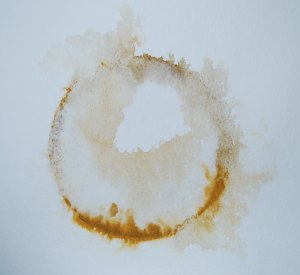 have a chance. Practice has taught me that I can rest in this moment, right here, on this mesh, on the edge of this river. And in that resting, a sliver of clarity can arise. I begin to see, truly see, my environment. I begin to connect with it, to experience harmony and amazement at the intricacies of all the relationships it contains.
Even in difficult circumstances, stopping and resting in an observer’s stance can reveal astonishing details about the interweaving of personalities, desires, and desperations. This is the core of practice for me: to see that congruence can arise even in unwanted experiences and that such experiences must be included as part of my definition of what makes up an ideal spiritual life (well-being, path). Unfortunately, we don’t tend to include the difficult and unwanted experiences as part of our checklist of what comprises the ideal spiritual life. Time to do so: the mesh, the roaring river, the difficult relationship, the worry and fear, restlessness and remorse, seductions and sorrows – list them all.
If not, my actual experience is skewed terribly and always found lacking against a set of constructs that are inherently unrepresentative of life as it is.

 It’s easy to go round and round in same rut believing we’re doing good for ourselves – or even for the world of suffering out there. And while we may be, it’s important not to buy so totally into that delusion that we forget we too are one of the suffering hordes. Often, it’s really our shadow side that’s pushing the wheel around, digging the tracks deeper, and convincing us that we’re oh-so-indispensable or oh-so-wise. It takes practice and time to take off that layer of ego and allow a direct knowing of ourselves. True, it starts with acknowledging our suffering, being honest about it, being willing to stay with it. And then we have a choice: we can masochistically stay there and choke in our own skin or leave behind what is keeping us too small for our life. We can refuse to re-trace the line of old patterns and risk that vulnerability of being human. And if we think, that’s all there is, we can notice how many times that skin has to be sloughed off as we grow our egos, over and over.
 108zenbooks