Unknown's avatar

only this day

Yesterday we held our monthly Day of Mindfulness.  This day combines the two classes we facilitate in Mindfulness-Based treatment.  We also invite the members of our sangha to come and practice with the clinic participants.  It’s held in a small hall in the Eastern Orthodox Christianity wing of a local university.  I love walking into the building early and, while Frank goes to convince the security people that we really do have the room booked, I wander the hall breathing in the incense from a closed chapel and relish in the golden hues of the iconography along the walls.

The day begins with much laughter and teasing about how we’re going to make it through; none of the participants have experience in sitting for more than the 30-45 minutes of their daily practice.  None have gone to a retreat or even been silent for more than a minute or two.  Their courage is remarkable.

We don’t reveal the details of the day until the class before the day.  They know the date and the start time.  I watch their eyes when we tell them it will be in silence.  As we reveal more and more (no eye contact, no reading, no writing, no gazing at the EXIT sign), they begin to look like they’re about to tumble down a rabbit hole.  Their trust is inspiring.

We settle in precisely at 0930 and I invite them to notice.  I talk a little about the purpose of practice and our expectations.  Whatever the theme, arc or overarching concept, it’s only ever about one thing: Notice.  And notice.  And notice again.  But we’re all new at this, even me on this day, at this time.  And I’ve been overly influenced by the radicalism of Hakuin’s rants (Wild Ivy) against “the quietistic withered-sitting methods of Unborn Zen.”  I can hear him:

Strive diligently, all of you!  Do not allow yourselves to be content with meager gains.  If you climb a mountain, go all the way to the top!  If you enter the ocean, explore its depths!

But taking them down the path to the sound of a single hand and rhinoceros fans is still beyond me.  So I offer Ken McLeod’s framework of discerning between the Effects of Meditation and the Results.

In Wake up to Your Life (check out Unfettered Mind both on website and Facebook), McLeod points out the Effect of meditation is that we notice all manner of feeling/sensations during the sitting.  Calm, agitation, joy, anxiety all arise because there is now space for them to manifest.  We tend to confuse this with the positive feelings we want from meditating.  When anxiety, sadness or something difficult arises, we assume the practice isn’t working.  So, I reassure them: this is what happens when we look down into the rabbit hole.  We notice the stream of our experience.  The Result of being open to what is present for us, McLeod writes, is steadiness as we transition from one experience to another.  And so we sit and notice for three rounds, interspersed with mindful movement exercises.  Our effort is awesome!

Lunch is in silence and then they walk outdoors for an hour with Frank playing Mummy Duck and 20-plus mindful ducklings trailing behind.  The residents in the dorm must wait for these days when they get to watch and wonder about this determined line of people, wrapped against the wind, headed for the parkland just beyond the campus, step by mindful step.  Whatever my anxieties (I watch from the hall upstairs), they never come back earlier than the allotted hour when they walk in faces scrubbed and flush with fresh air.  My faith is replenished.

They share their experiences with each other and discover that suffering is universal.  They share their surprise at their stamina and the realization of who they become when they feel rebellious, frustrated, bored, or anxious, caught in the belief that this beautiful day should have been spent some way other than in silence.

As if silence robs us all of the capacity to experience our lives.

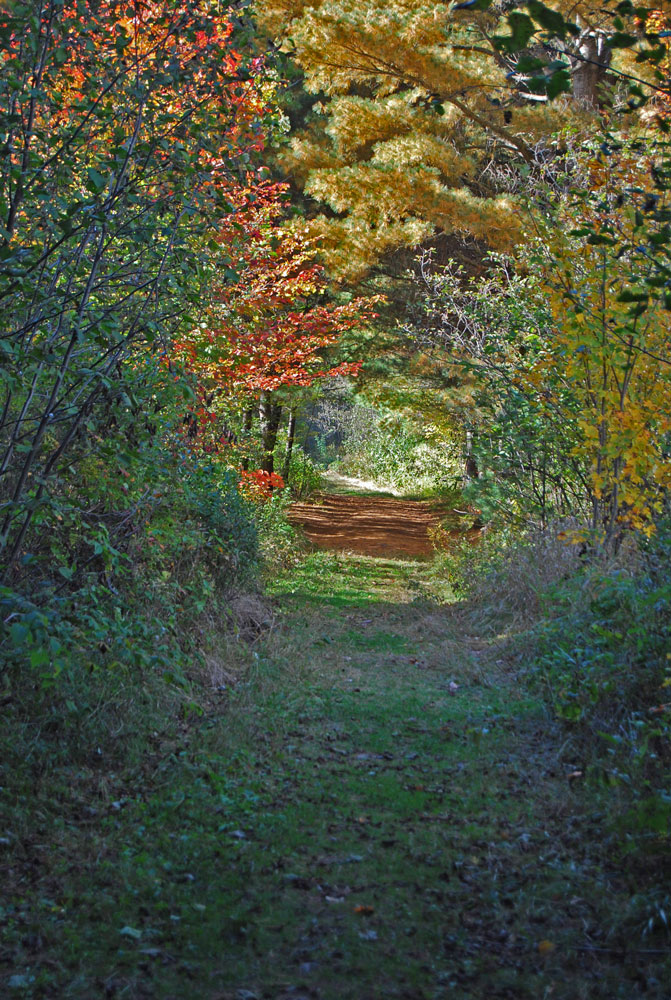
As if attending to the sense of touch takes away the sense of sight and the vibrancy of the Autumn leaves are missed.

As if not having is the same as missing out.

As if this moment, because it will never come again, takes with it all possibilities and promises.

We notice the wanting.  And laugh.  As if!

Unknown's avatar

Hakuin exhibition in NYC

I am thoroughly thrilled about this exhibition.  We’re planning on going to it for our 30th anniversary celebrations.  Not only will I get to see Hakuin’s work live but, if the schedule works, get to hear Stephen Addiss teach again!

Edit:  Link to more pictures of Hakuin’s work (thank you, Doug M) here.

Hakuin’s journal/autobiography Wild Ivy is a terrific read and I’m hoping to explore some of his teachings next week.  (Still recovering from that 108 day marathon!)

In the meantime, please note the dates of this exhibition which will travel to New Orleans and Los Angeles.

from the Press Release:

National Touring Exhibition and First U.S. Retrospective Illuminates the Art and Life of Preeminent Zen Master Hakuin

The Sound of One Hand: Paintings and Calligraphy by Zen Master Hakuin

October 1, 2010 – January 9, 2011 at Japan Society Gallery

New York, NY — What’s the sound of one hand clapping? This famous meditational question was first framed as “What is the sound of one hand?” by Hakuin Ekaku, an 18th century painter and Zen master whose work is showcased at Japan Society from October 1, 2010 to January 9, 2011 in The Sound of One Hand: Paintings and Calligraphy by Zen Master Hakuin.

“Although a major figure in Japanese art and widely regarded as the most important Zen master of the last 600 years, Hakuin is virtually unknown to American audiences today—a situation Japan Society intends to redress with this, the first retrospective of his work ever to be seen in the United States,” says Joe Earle, Director of Japan Society Gallery.

The Gallery at Japan Society has co-organized the exhibition in collaboration with the New Orleans Museum of Art, where the exhibition will be presented February 12 to April 17, 2011, before traveling to Los Angeles County Museum of Art from May 22 to August 17, 2011 (in 2 installments).

For the showing, exhibition organizers and noted Zen scholars Audrey Yoshiko Seo and Stephen L. Addiss have gathered 69 scroll paintings by Hakuin Ekaku (1685-1768) and nine by his major pupils from public and private collections in Japan and the U.S. The selection brings into public view a masterly body of work, one in which deftly executed, fluid lines, delicate ink washes, quick, rough strokes, and spidery calligraphic marks serve to capture the energy of life and the playfulness and spiritual intensity of Zen practice. The exhibition traces Hakuin’s development from the more linear works of his early period to paintings and calligraphy of massive power from the final two decades of his life.

Among the most delightful paintings on view are those that depict mundane objects and activities, sometimes in the guise of myths and folk tales, whether it be a monkey on a tree limb, two preening foxes dancing, or a Buddhist pilgrim perched on the back of another to write on a high wall. In the painting Blind Men Crossing a Bridge, the tiniest of brush strokes manages to conjure up halting steps and uncertain balance in a progression along a wooden bridge—the latter summoned up in one broad, bold, horizontal stroke. A similar economy enlivens other works, such as Shoki Sleeping, which captures a tub-bellied folk deity, boots on, snoozing. One of Hakuin’s favorite subjects was the happy-go-lucky wandering monk, Hotei. Featured in the exhibition is a painting of Hotei asking “What is the sound of one hand?” along with 17 other depictions of the bumbling monk as everyman: sleeping, meditating, riding in a boat, shouldering a large mallet, and—most unusual of all—floating as a kite in mid-air.

Hakuin would have created pictures of these folk characters—popular figures in Japanese culture—as a way of reaching out to ordinary people. But he created works with Zen subject matter as well, including portraits of Zen patriarchs executed with dramatic, virtuosic brushwork.

Also featured in The Sound of One Hand are pictures created for followers of non-Zen forms of Buddhism, including one of the deity Monju, who represents wisdom and the power to cut through all obstacles. This is one of Hakuin’s most finely painted scrolls, showing how delicately he could wield his brush.

Humorous wordplay is an inextricable part of many of the featured works. The punning lines in a painting of a small singing bird poke fun at human behavior, and a flowing inscription in a drawing of Otafuku, the Goddess of Mirth, slyly connects the goddess’s skewered morsels to ideas not yet absorbed by a man with a closed throat (i.e., one not yet open to the teachings of the Buddha.)

“Hakuin integrated painting and calligraphy in a manner that had never been done before. Characters would become part of a drawing, or a drawing would be entirely comprised of characters,” notes co-curator Stephen Addiss.

Life and Art as Zen Practice

Perhaps because Hakuin’s paintings and calligraphy were an extension of his role as a teacher, as a rule he did not create art for the marketplace, patrons, or temples. Most of the paintings on view in this exhibition were given to lay followers as gestures of encouragement or to fellow practitioners in recognition of spiritual advancement, with certain subjects deemed particularly suited as Zen teaching tools for individuals. Others works were probably given to monks from other temples who admired Hakuin’s Zen teachings.

Despite spending most of his career in a small rural temple, Hakuin revitalized Zen practice throughout Japan. “He deepened monastic practice by insisting upon post-enlightenment training and by consciously and enthusiastically reaching out to lay parishioners in new ways,” says co-curator Audrey Yoshiko Seo.

“Hakuin believed that the Zen experience must be taken back into the world in order to flourish and fully aid people in their journey. His influence was so great and far reaching that it is impossible to imagine contemporary Zen practice without him,” adds Addiss.

Catalogue

A 281-page, fully-illustrated catalogue The Sound of One Hand: Paintings and Calligraphy by Zen Master Hakuin (Shambhala Publications, September 2010), written by Professors Seo and Addiss, offers further scholarly insights and provides a permanent record of the exhibition.

Related Programs

Japan Society presents several events in conjunction with The Sound of One Hand, including a mini-exhibition, student and family programs, writing and painting workshops, and more than a month of Zen related programming (Here & Zen series) with performances, lectures, a film screening, and a guided meditation. For the full program click here.