Unknown's avatar

trudging the wrong path diligently

moon1 I’ve gone missing. Typically, I go missing in action, meaning that I tend to be so activated that I get lost or even miss who I am or whither I goest. Did I use to write diligently every day? Execute (in many meanings) brush paintings each week? Read books and review them regularly? There’s a fire that is fuelled by longing and a heat generated by desire. It keeps things bubbling and moving forward so that there is for all intents and purposes a semblance of order wrested from chaos. In that blazing it is possible to do all manner of things. It is possible to have insights and revelations, paintings and prose, lovings and lustings. It is possible for each of these havings to be flavoured as  wholesome and unwholesome.

When I wrote every day, it was from a need to clarify my misunderstanding of the dharma, of practice, and of what my life was, is, has become through the generosity of myriad beings, causes and conditions. It was the same in painting or photography. Practice, clarify, clarify, realize, realize, make real. This was and is practice. It is a stepping out into the marketplace, albeit it was a shady, tucked-away nook. I also wrote to create a space between what I practice professionally as a psychologist and what I practice personally as a Buddhist. That’s a tougher process of clarifying because they are so intricately woven together. Neither conduit of a way of being lends itself to segmenting situational identities let alone body from emotions from sensations from thoughts.

It goes without saying that I write because there is an egoistic part of me (only a part? I ask my unrelentingly needy self) that wants to be heard, read, reflected upon and otherwise validated, valued, and thereby mirrored in the neurons of those myriad Buddhas and Bodhisattvas. Is it really ego or is it just human to want to feel part of a larger cosmos, some community that is a summation of all its parts and then with added value? It can be that too, I suppose. There is a sense of belongingness that emerges from all our efforts, except that we often fail to see it for all the artificial smoke and fake mirrors the ego throws out.

Write or not, I have come to understand that the path is not revealed in the writing. Nor is the path itself the writing. Every word is wrong and every conclusion is misinformed. Why? Because to start with the idea that something needs to be revealed or that some connections require a mirror to be realized (made real) is already wrong-headed. Now the bottom line in all of this is a simple question: do I actually have anything to say? These days, I would say, “Less and less so.” There are moment when I think, “Oh, that needs a rebuttal!” Or, “Egads, do people actually accept that as the definitive word? Maybe I should saddle up the old destrier nag and armour-up!” Then I sit down, have a cup of tea, and the thought passes.

And yet… and yet… this wrong-headed path needs to be trudged not just by dismissing the myriad dhammas as themselves wrong-headed but by sitting down observing how right- and wrong-headedness arise as co-joined twins discernable only by how we meet them.
Unknown's avatar

playing fetch with the black dog: buddhism & depression

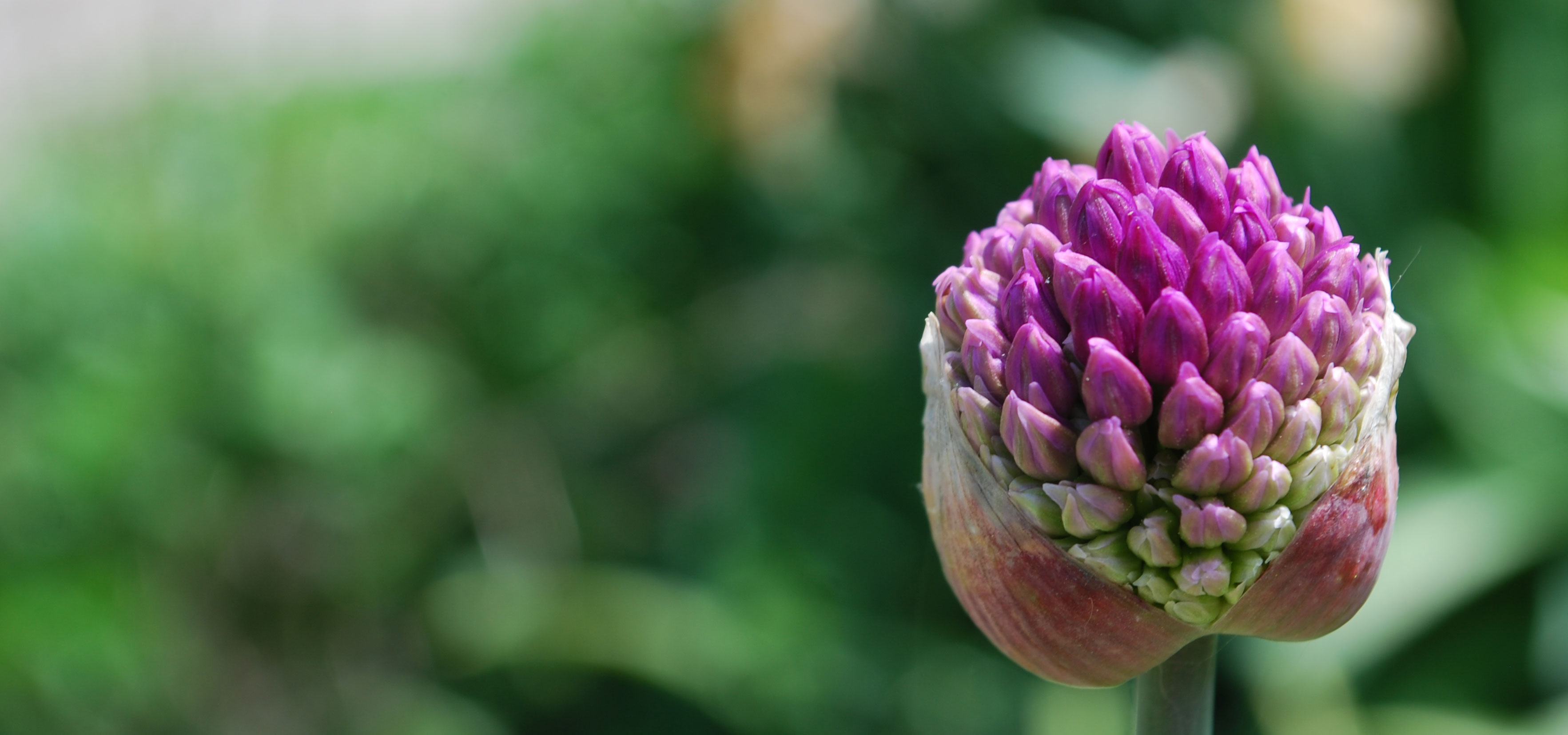
alium

It’s finally a sort of Spring here. I mean “sort of” in the sense that there is no clear delineation between the end of Winter and the start of Spring in the very best of years and it’s more than apparent this year. It would be nice to claim that this is some sort of growth in my awareness and hence degree of enlightenment. But it’s not. Spring just seems to saunter up the laneway and turn the corner to the rose garden, looking for all intent and purpose as if it had simply stepped out for a moment to fetch a pail or a trowel. And then looking shocked at the rampant growth of weeds and frost-withered daffodils.

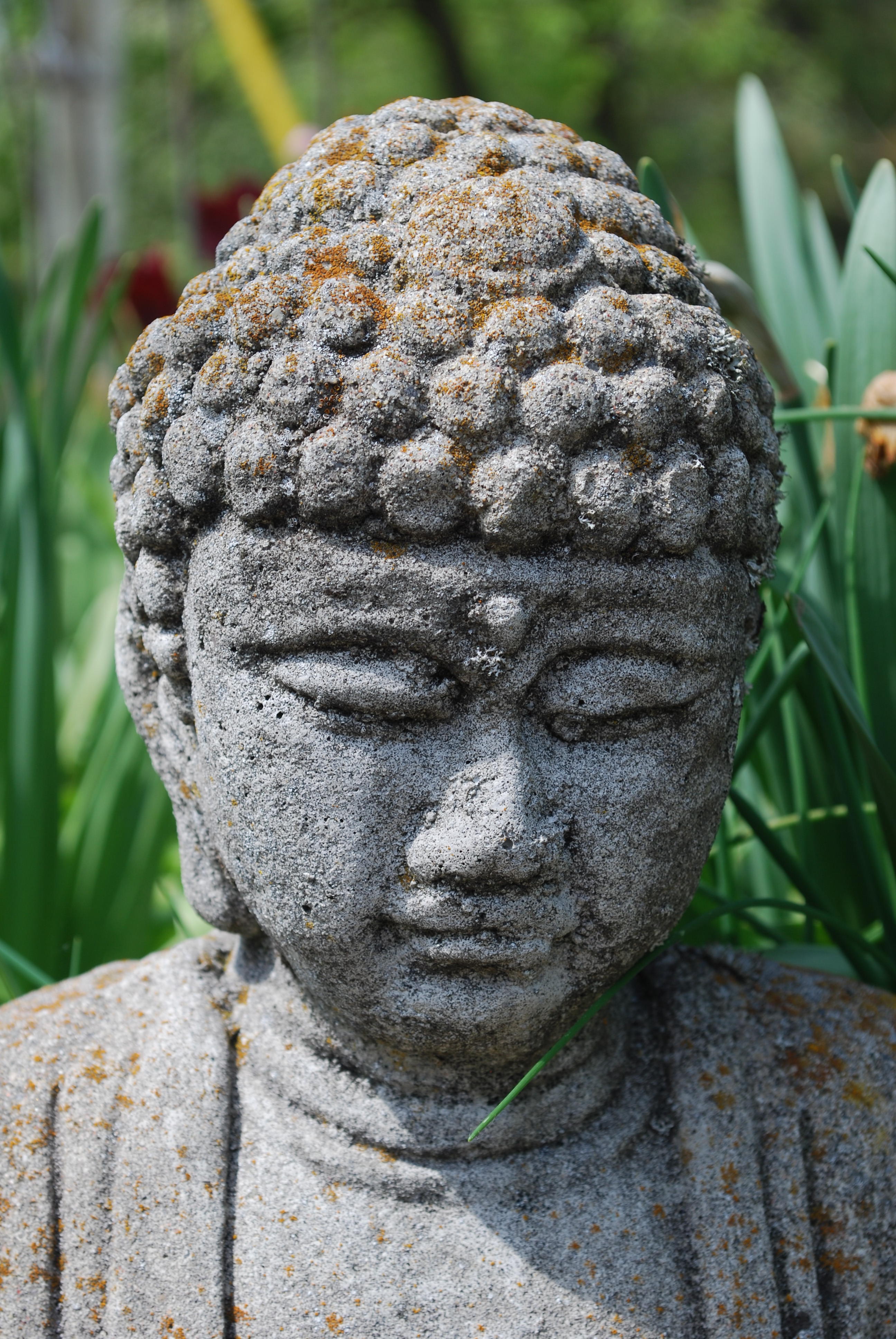
DSC_0032Lady Spring not being the kind to hang around for the hard labour, Frank headed out into the swarm of mosquitoes and black flies to stave off the advances of the dandelions and their ilk. Two hours later I was summoned to check on his work; the greenery had become more undifferentiated in being flora or possible compost. I was astonished. The roses stood out in solitary splendour, the alium sat happily in their tangle mess of leaves and stems, the Buddha wore a half-necklace of chive – and all seemed perfectly right with the world.

There are moments like that these days. It wasn’t always so. I was deeply moved to read Justin Whitaker’s recent blog post on his journey through darkness. Justin writes about his dance with depression and it’s a worthy read for all of us who have taken long walks with the Black Dog. (Side note: if you Google “black dog of depression”, there are a number of fascinating hits.) Many of us know the pain, despair and devastation that can accompany depression and its cohorts of anxiety, phobias and self-harm. We have gone on voyages and pilgrimages to find cures, salves and resolutions to our pain. Some of us enter the path of Buddhism. Some of us meander, picking and choosing in the exact way that reinforces the clutches of helplessness and hopelessness because nothing can ever be a certainty or give assurance that the clouds will lift forever.

And some of us live in a strange oblivion, unaware of that beast dogging our heels or curled snugly against our chest as we lie in bed wishing the dawn away. Perhaps we notice a regret that we made it through the night and have to face another day of masked frailty. Perhaps we take deep breaths just before an exertion, mental or emotional. Perhaps we turn to Buddhism because it promises an end to suffering despite our insistence that we really cannot be suffering in this mud sty of materialist delight.

I don’t recall if I came to Psychology because I suffered or if I came to Buddhism because it was the best articulation of the psychology of mind and behaviour… and because I suffered from those tangles of mind and behaviour. There are so many memories of sitting in the library stacks researching schizophrenia because that could be the only explanation for the impossible reality I experienced. There was this moment of heart-rending insight when I learned that there was a name for what I experienced. It was called “impermanence.” Of course, there were a few nuances to that.

At a gathering of Burmese refugees, I was asked when I left Burma. 1965, I said. He looked at me perplexed. “1965? What was happening then?” In a single sentence, 35 years of exile were wiped away. I could appeal to no war, massacre, slaughter for having left with my parents who themselves bore witness to a range of subtle and overt forms of torture and torment. But it was there. Deep in my memories lay stories I overheard of people being taken away and returned broken in bone and spirit, visits to families left destitute because of changing loyalties and rampant paranoia. But it was 1965 and nothing was happening so I could not have been suffering.

The story could go on for a long while yet but it is little different from what Justin or others have shared. We twist and turn at the end of our perceptions of what it means to feel helpless and hopeless. In the end, however, we exhaust ourselves and become still – in body if not in mind.

What I really want to put out here in black-and-grey is that we tend to dismiss our birthright to suffering. We seek external validation for it and by doing so we fail to see the simple truth that we suffer. Never mind if there is a diagnosis (I’m not big on diagnoses). Never mind if there’s a label that makes it more communicable to health care providers and insurance providers. There’s a place for all that but all that has no place in turning around and sitting in front of that loyal black dog who is simply trying to do its job.

The practice of Buddhism in the face of mental health issues is to teach us to turn around and sit down. Wait for that experience to show up. Meet it with all the equanimity, fear, reservation and curiosity we can muster. It’s a tough scary call to practice but it is an irrevocable responsibility given the moment we first wailed.

DSC_0011

And some days then, we hear with profound clarity the burbling of the spring behind the house. We see the green in the banks of the brook. We smell the ploughed earth and the mown hay in the back field. We feel the soft fur of the animal at our feet, our own “soft animal body that loves what it loves.”¹ We taste the wild strawberry tucked under the lavender bush. And our mind flashes with realization, this is it. Just this.

We throw the ball and the black dog delights in playing fetch.

__________________

¹”“Wild Geese” from Dream Work, copyright © 1986 by Mary Oliver.