Unknown's avatar

hand-wash stones cold

DSC_0158 It’s the mantra of this season around the community: Tough winter. Lose everything?

I would hope so. Losing everything is the practice, isn’t it? Youth, good health, eternal life – these we know we are meant to lose. Ah but, let go? No. That’s a whole different matter. I’d rather die than let go and that has all the makings of a terrific TV drama. The sad thing is it’s my life drama. Dying is easy¹; letting go requires getting dirty.

A tough winter helps with letting go. So do two hooligan pups weighing in at 90 lbs apiece and loving the untrammelled joy of tearing through the dry bed garden. The results showed as the snow did its own letting go: a magnolia with top-kill, the Japanese maple looking gouged out and gnawed, the pebbles of the dry bed strewn hither and yon.

Determined to face this year’s disasters with equanimity, I dug deep beyond my typical tendency to overwhelm. This year would be different. I am, after all, a seasoned practitioner. So I sat in the Japanese garden by the upheaval of landscape material, stones, and cedar chips stuck to dollops of dog shit and cried. Crying is a normal function of a deep-felt embodied equanimity. Truly. In that moment of sensorily experiencing a vibrant mixture of soil, dirt, and poop, it is a statement of abject honesty which is the first part of equanimity.

The second is to start with what is at hand. Yes, even if it is dog poop. But if you’re really squeamish, do it first. Then pick up each rock, pebble, stone and wash off the debris of winter. Some things need a bit of help to let go of their accretions because they can’t quite do it for themselves. Sometimes we need to be the one driving that wedge between comfortably covered in useless material and frighteningly adrift in a cold wash of freedom.

And so I progressed from the Japanese garden to the walkway of the south garden.

DSC_0014


Then onto the veggie and rose gardens where there was much more letting go to be done. It’s easier to let go of weeds but making the decision to tear out the vegetable boxes and all the paraphernalia that went with it was a bizarre series of discussions that eventually amounted to confronting my attachment to “being fair” to a pile of rotting wood. Pruning back the overgrown rose bushes drove the point home quite literally. There is no logic to attachment, only a misperception of what we think we’re nurturing.

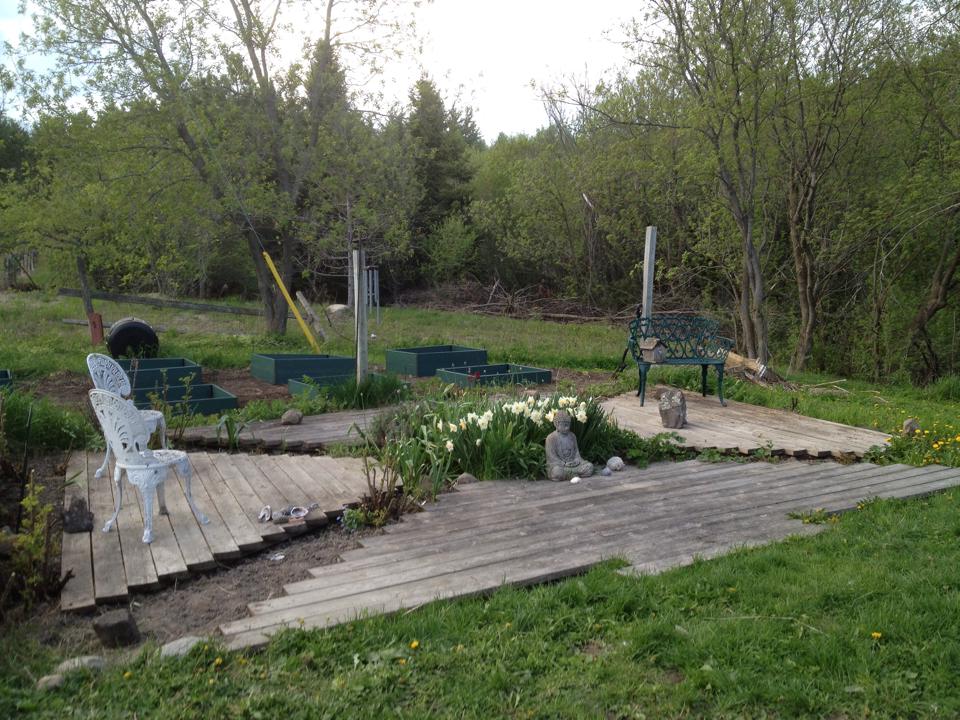
DSC_0040

rose garden


In the end all the procrastinating, crying, and debating culminated in a rather nice new layout.
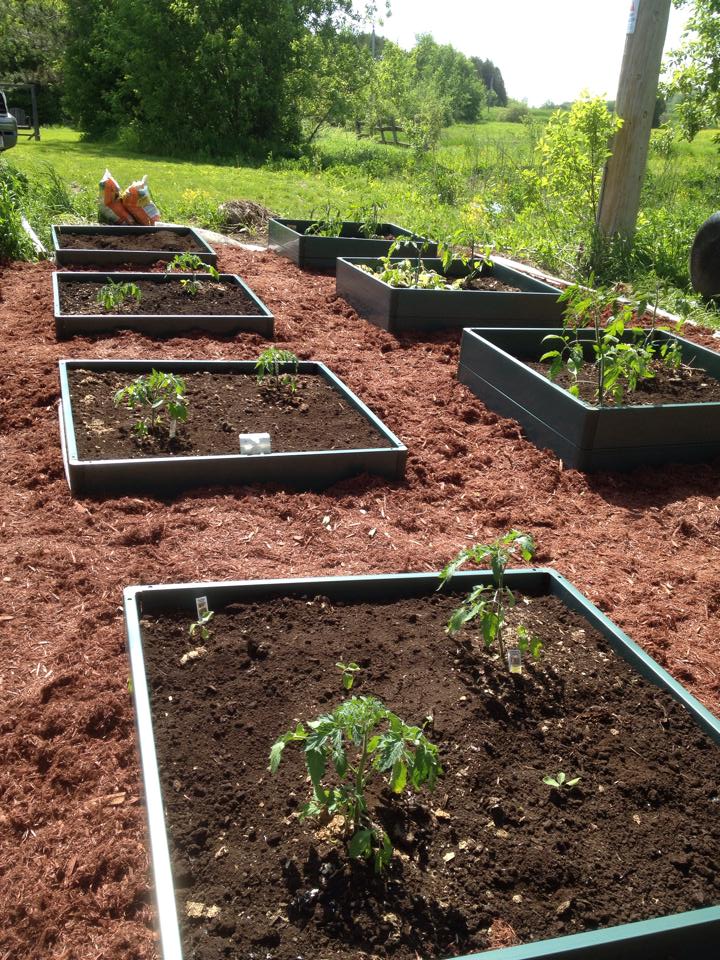
veggie boxes


Yes, it’s been a tough winter. And we didn’t lose much but we let go of everything.

————-

¹Ram Dass (2010). Dying is absolutely safe. Retrieved from 
Dying is Absolutely Safe – Awareness Beyond Death


Unknown's avatar

what am i doing? lessons from the edge

L&F-BCBS

Hardly the next power couple in the dharmic world but we are perhaps a good example of karmic consequences of not steering clear of muddy waters.  Frank & I lead a retreat on the Buddhist roots and ethics that underlie mindfulness programs at the Barre Center for Buddhist Studies. This was an opportunity gifted through the immense generosity of Chris Germer, Kristy Arbon, Mu Soeng, and BCBS Executive Director Laurie Phillips, all of whom galvanized the work we’ve been doing on making explicit the root teachings that inform the psychological aspects of contemporary mindfulness.  Although the retreat was not intended to be a journey into personal practice, it had that effect and spoke to the need for these foundational teachings. It keeps what tends to be superficial attempts at attention and awareness grounded in the original intentions of practice.

Stepping into that liminal space between Buddhist philosophy and psychological models of suffering is not difficult. But it does require a willingness to let go of one’s tribal mentality and concede that wisdom only arises as a result of contact and community. It was uplifting to be with so many practitioners who willingly entered into the intention of the retreat and shared their personal and professional wisdom with us.

Happily, our article, Traditional and Contemporary Mindfulness: Finding the Middle Path in the Tangle of Concerns, was published in Mindfulness the day before the retreat. The email response so far is mostly positive and supportive with one rather wild foray into psychology-bashing & mindfulness as the Ultimate realm where everything is One. This, along with a few comments from surprising sources, makes me wonder if we’ve forgotten that the Buddha recommended teaching to one’s audience. I tried to make the point that most people don’t show up on my doorstep and say, “I’m struggling with the evanescent nature of experience.” They tend to come with a felt though poorly articulated sense that something is amiss. As teachers of any ilk, we are meant to meet those who suffer where they are on the path, not where our elevated egos think they should be.

Not just “know your audience” but also “what am I doing?” This is the edge we found ourselves walking moment by moment as we opened up the texts and poetry that inform contemporary mindfulness. Of course, “what am I doing” occasionally took on the feeling tone of “why the hell did I think I could do this!?” But that’s a post for another day.

I’ve thanked Justin Whitaker in the article but it is worth repeating it here: Thank you for keeping this discussion going at so may levels.