


There’s a new energy in the house. Not just the wild exuberance of the pups who have so far managed to survive my every threat of sending them to the Great Beyond. Not just the brighter light of Spring or the receding snow line on the fields. Not just the thick glaze of ice crust on the trails from the day melt and night freeze. Not just anything in particular but all things in their eternal uniqueness that come together effortlessly. Yet that asks so much of us – to simply wait with deep faith that change requires little of us but presence.
After watching Espe Brown’s movie “How to Cook Your Life,” I had an urge to bake bread. This was a somewhat safer urge to indulge than the one I tend to have after watching superhero dog survivor movies. But bread making requires effort akin to the great effort of Zen; and yet Espe Brown made it look and sound like the ultimate in cultivated laziness. Now I get all the be one with the carrot and the spinach rap of Zen. I do. Really. I even get the drink your tea even if it’s just a riff on the sentiment because I’m doing so while pounding out the next blogpost. And I know about bread baking too having spent many a year baking two, three, many loaves each weekend.
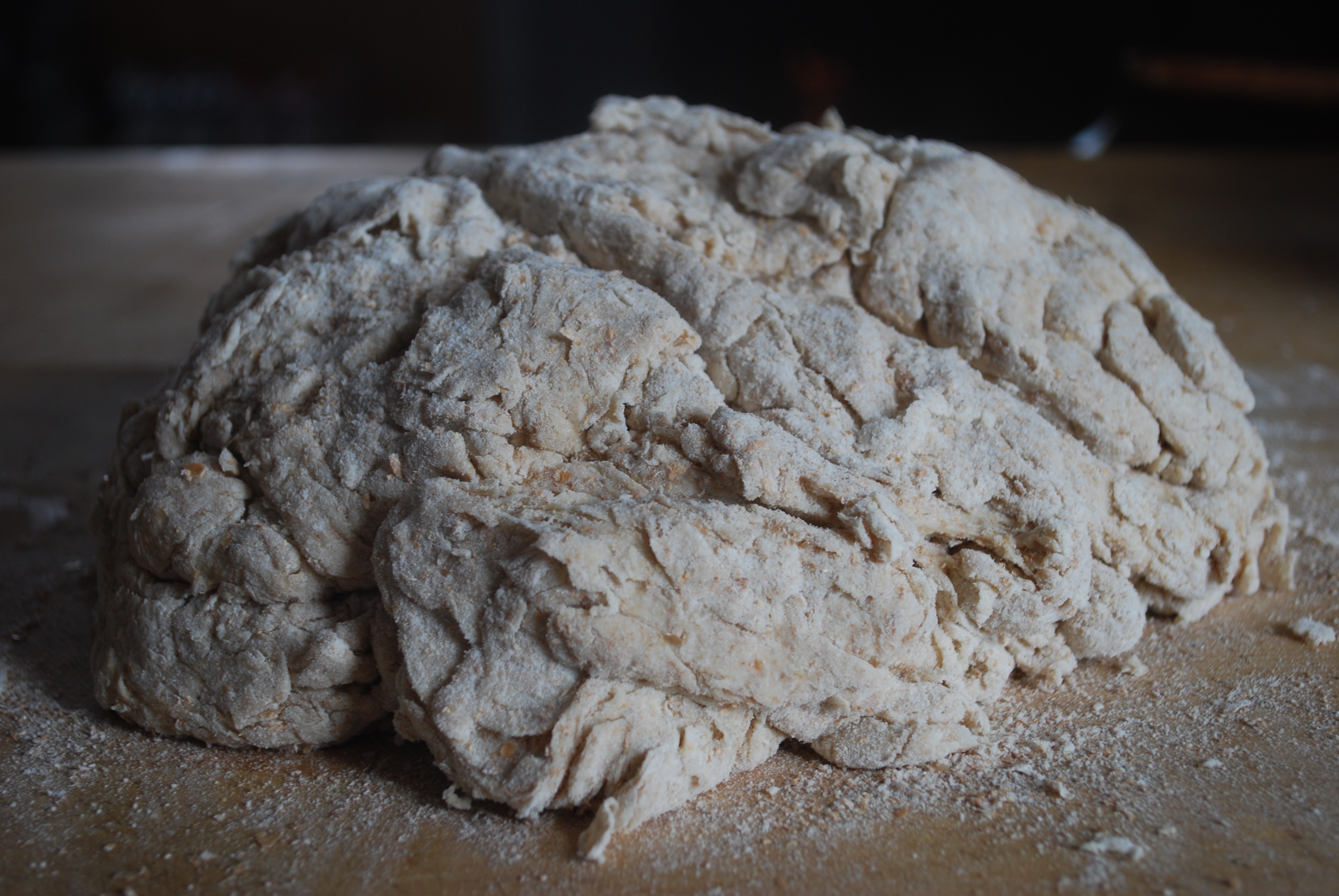 The dharma of bread making is that there are no guarantees. It thrives on doubt. Great Doubt. It is fickle in its liturgy. Empty yet demanding of form. Demanding of protocol yet unyielding in promises of outcome. It is not for the rigid of mind or acolyte of scrupulosity. And that makes me the worst person on earth for this practice.
However, great effort is often codependent with great blindness and sometimes the delusion of possibilities pays off. In one of his teaching moments, Espe Brown said, “Let things come to your heart.” And when I do, it’s clear that bread making is not about bread or making. It is about distress tolerance.

At each stage, from the way in which yeast feasts on the sugars to that tender balance between elasticity and collapse of the dough, creating the loaf-to-be is only about trusting the invisible bodhisattvas of gluten and fermentation more than the demons of fear and desire. It is about letting things go into the dark and do just what they are meant to do without the interference that arises from our desperation to have it done. Letting go, yes. Not clinging, definitely.
And yet. We are not given to truly know the essence of these transitions. The first round of bread making resulted in a stunted, thick loaf that only Frank, in his endearing love of all things carbohydrate, would relish. Heavy chunks of glutinous wheat with a savoury buckwheat bite make his morning (and I don’t doubt he dips it in his high-octane coffee). It may have been the temperature, the thundering hooves of two playful puppies, the arch of my eyebrow, the waves of panic energy that seeped from my palms into the dough as I kneaded it. Not knowing is the most intimate, Dizang said. I wonder if he baked bread too.
 The second loaf was more generous in its response. Then again, I adjusted the parameters. A different recipe from a different book, a few breaths reminding me of my capabilities, more wood in the wood stove, and taking the pups for a 1 hour walk so I didn’t keep checking the proofing of life in the dough. We can put all the ingredients together when cooking our life. We can stir, beat, fold, and knead them into some shape. We can read each expansion and contraction for portents of praise or blame. We can entrust the clusters of our life to the dark and the light. We can hold them in boxed forms or freeform. We can blast them in furnaces or freeze them for some future date.
But we can never really know until we break them open and let them penetrate deep into our heart.

 108zenbooks