It’s the day of Nate at Precious Metal‘s brilliant and fun idea of Blog-Swapping! Nate is hosting my post on Sustaining Practice and I’m hosting Dwan from Budding Buddhist. To see the interconnected blogs click here.
It’s my pleasure to introduce Dwan from Budding Buddhist. I wandered through her site and was struck by the balance of her engagement with her inner and outer experiences. She says she’s a beginning practitioner (I would disagree) so I went to her very first post to see what was lying there, dormant. It was a moving expression of her strength and steadiness. I think you will enjoy that first post when you visit her on her home turf as you will in reading where she is in this moment.
The fabulously patient Genju writes:
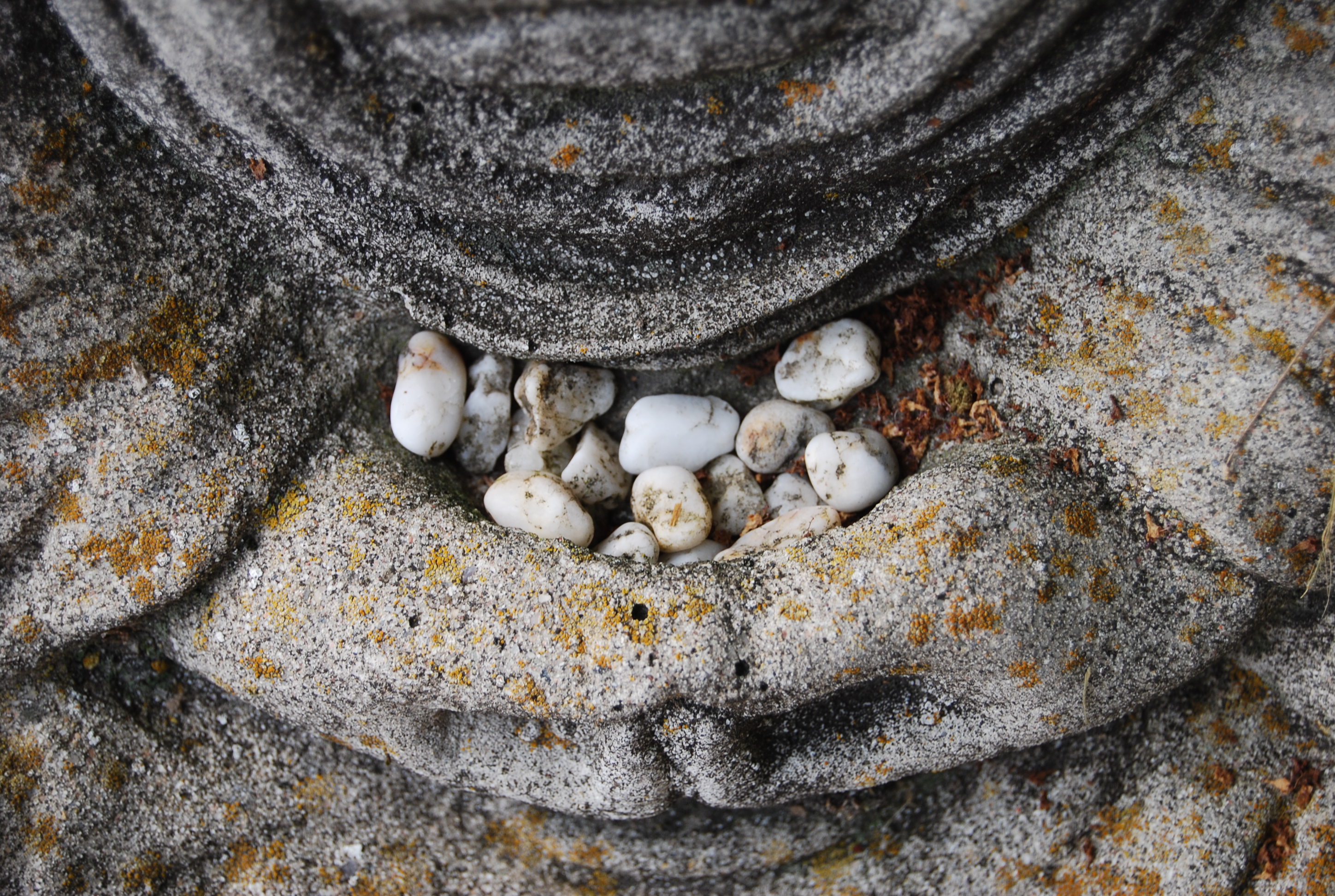
I was struck by the image of the empty waiting room and wondered if you’d like to write about your practice as it has evolved (a series of empty waiting room where you’ve practiced to be with what is?).
It’s amazing how “obvious” ideas become once we “get” them. One little sentence and all the fluffy unformed ideas I’ve got floating in my head solidify into something tangible, present, and already-there! I think the idea of a series of rooms is an excellent metaphor for my practice, though the dour humorist part of me insists on suggesting that a better metaphor might be a creaky wooden roller coaster. -.-
No different than any other student (I imagine.), my practice has ebbed and flowed. At first it was all about learning form, technique and content. So that first waiting room was crowded – full of ideas and concepts, goals and expectations. I stayed here for quite a while, checking out all the nooks and crannies but not really venturing into them. This room was more about broad strokes and lots of fidgeting. I guess if it had a theme it was dust and tchotchkes. It was pretty noisy, too.
Since that first initial bloom of practice I’ve had a lot of ups and downs. Life has quite frankly gotten a lot harder and there have been periods of relative darkness and struggle. My practice has reflected this. When I struggled to breathe and simply be in these places, these “waiting rooms” echoed this – they were dark and cramped and sometimes it seemed to take forever to find the door.
I never ever stopped looking for the door, however, so every once in a while I slipped into a new room with a better view. These rooms have windows, which I love to throw wide open. Taking the time to renew my dedication to practice and to the moment is always a breath of fresh air, invigorating on so many levels!
There’s a pattern to my rooms – a sequence of light and dark almost like tree rings, and this is how I’ve come to see the ups and downs of my practice – as markers of the passage of time and effort. A while back Venerable Ashin Sopāka wrote a really great summuppance of Mechanics of Kamma and Rebirth. In it he uses a metaphor of a long line of people passing a sack of seeds from one person to the next, each person dropping a seed and adding a new one to the bag. While taken well out of context, I think this idea applies the progress of my practice. Things change, things rise and fall, but essentially the root is the same. So “I’m” still here, even as the rooms come and go.
My “waiting rooms” *are* growing quieter and plainer. It *is* getting easier for me to hear my breath. Sometimes knowing that it’s just me, my breath and the present moment is a tremendous comfort and other times it can be positively maddening.
In any case, returning to that breath is the frequently the extent of my practice right now. There’s no time or peace for a more formal practice. I take comfort in that, however. Reverend Danny Fisher’s Gift of Dharma for 11.30.09 speaks rather eloquently into this, in my opinion:
What then, is the correct Mahamudra practice?
The ordinary mind is itself the correct practice. That is to say, to let the ordinary mind remain in its own natural state.
If to this mind one adds or subtracts anything, it is then not the ordinary mind but the so-called ‘mind-object’ [Yul].
To make not the slightest intention and effort to practice, and yet not to be distracted for a single moment, is to practice the natural mind correctly.
Therefore, as long as you can keep your Self-awareness, no matter what you do, you are still practicing Mahamudra.
— the Ninth Khenchen Thrangu Tulku, Karma Lodrö Lungrik Maway Senge