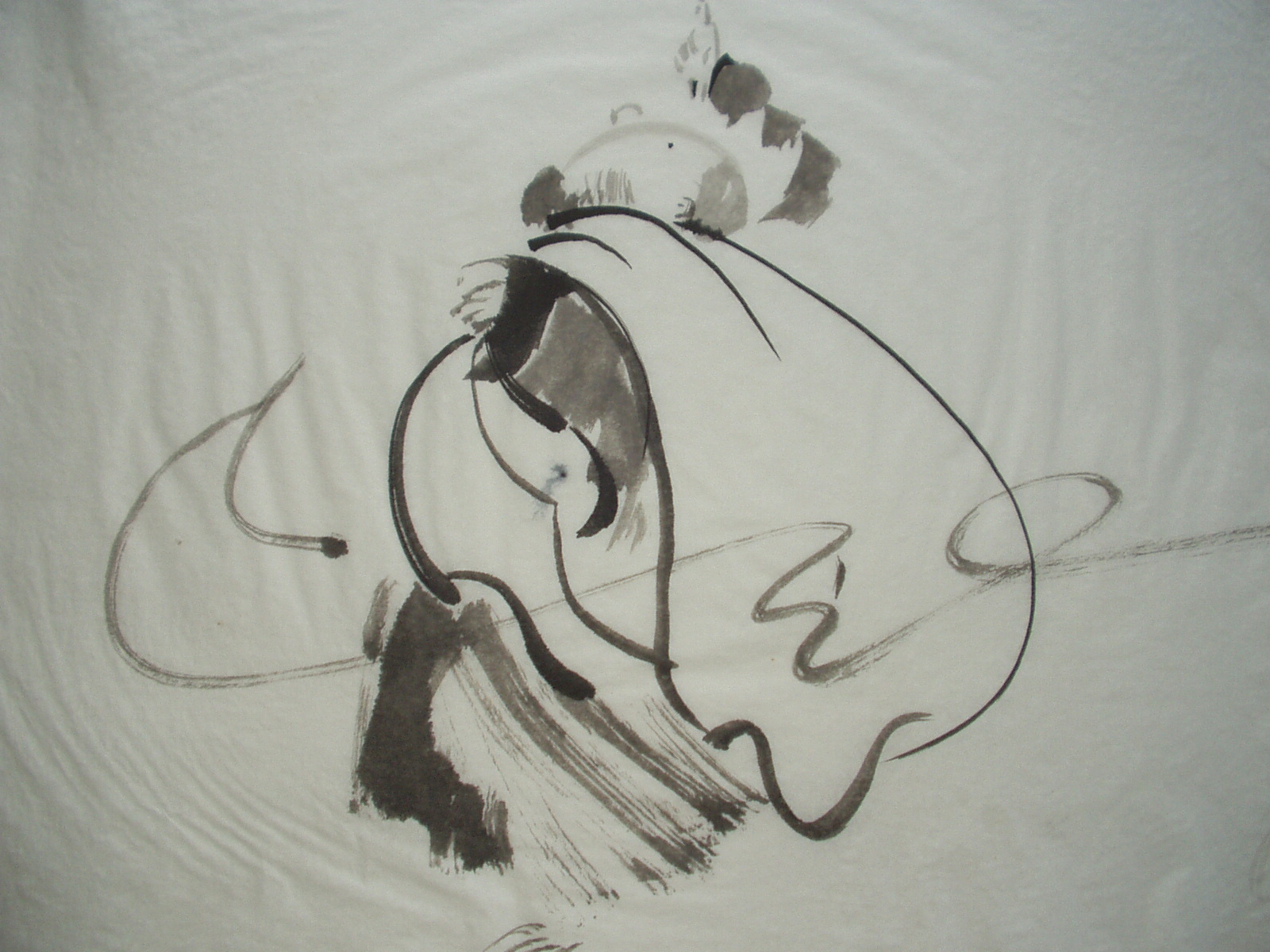
A long time ago, I wrote a paper on how psychology mismeasures being human. I proposed that in its development of tests and assessments, it had taken the finger pointing to moon, amputated it from the body, placed it on a grid and took its measure. From those data, we have come to believe that the feel, sound, smell, taste, sight, and concept of the disembodied finger is the totality of who we are. And we ask endless questions about the validity and reliability of our ways of knowing what we are.
I got a C, I think. The prof went on to teach at Harvard. I have gone on to learn how to re-attach the finger to the Dharma Body.
There is much that is valuable in how we understand the world from what philosophy, psychology, sociology and all the ologies have contributed. Still, sometimes, I try to remember that what we know is, of necessity, disembodied from the core of who we are.
So, when I see a finger pointing, I remember it is not about finger or moon; it is about orienting myself in a direction. I follow the finger back, not up and outward into nothingness – back into the hand, arm, shoulder, heart, gut, legs and feet. Then in reverse to the fingertip. And, like the needle of a compass, I point in the direction of my path grounded in what I am.
A (modified) story from The Moon Appears When the Water is Still by Ian McCrorie:
Two teachers argued long about the true path, authentic texts, pure Dhamma. A servant boy served them tea.
“And what do you do here?” asked one of the learned monks.
“I serve tea,” answered the boy.
“Where are you from?”
“Here.”
“When did you start work?”
“Now.” The boy bowed and left.
“Perhaps,” said the monk,
“It is we guides who need to observe one such as this
whom we hope to guide for he understands more clearly than us that
the truth is not seeking more answers
but asking fewer questions.”
Thank you practicing,
Genju