Unknown's avatar

pachiko – the other tale

Dark and light meld in this revelation of the Truly true story of Hachiko the faithful dog.  I had no idea that there was a sadder version (Oh!  Could there be a sadder version?!)  I knew I had to share with you this wonderful historic drama that sets the original story straight!  Here is an excerpt from Zokyo: The World According to Zebrio:

Almost any Japanese person can recount the story of chūken Hachikō, (忠犬ハチ公, “faithful dog Hachikō”,) Japan’s most beloved dog and national symbol of loyalty, honored for returning everyday to Shibuya’s bustling train station to wait for his master’s return, even long after his death. Few, if any, know of or are willing to acknowledge the pup’s miscreant sibling, taida na Pachikō. (怠惰なパチ公, “slothful dog Pachikō.”)Born in November of 1923, “Hachi” and “Pachi” were two pups from a litter of seven, born on a farm near the city of Ōdate, Akita Prefecture. Their owner, Hidesaburō Ueno, a professor in the agriculture department at the University of Tokyo, adopted the pair and brought them back to Tokyo, naming them after the Japanese word “hachi-pachi,” used to describe the sound of popping bubble wrap, a new and popular pastime in 1920’s Japan.

As pups, the dogs were identical, but as they aged, Pachiko grew dark distinguishing eyebrows, that according to historians, later inspired Japan’s bushy eyebrow craze that has yet to come out of vogue to this day. With his distinguished eyebrows, Pachiko soon gained the favor of Professor Ueno as the more clever of the pair, who later remarked in a letter to his wife, regarding all night vigils at the station by the less adroit Hachiko while the professor was away on lecture tours, “You must be kidding! That idiot dog Hachiko waits overnight for me at the station?”

To read the rest of this amazing tale click here.

Thank you for practicing so diligently!

Genju
Unknown's avatar

turning in both directions

In Yaoshan’s Nonthinking, Daido Loori Roshi teaches on the tendency of mind to take the dualistic stance to experience.  The capping verse is lovely:

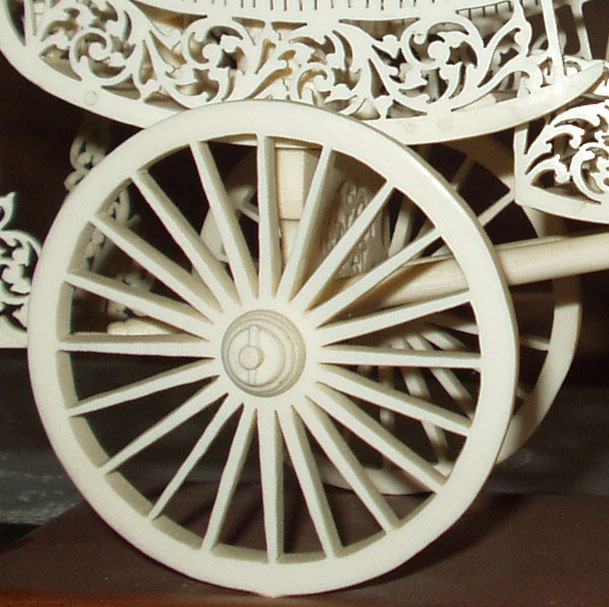
When the dharma wheel turns
it always goes in both directions.
The still point is its hub, and from here,
all of our myriad activities emerge.
Rather than give solace to the body,
give solace to the mind.
When both body and mind are at peace,
all things appear as they are:
perfect, complete, lacking nothing.

He continues:

The capping verse:

When the dharma wheel turns it always goes in both directions. The still point is its hub, and from here, all of our myriad activities emerge. The turning of the dharma wheel in both directions simultaneously is the merging of the differences: good/bad, thinking/not thinking, up/down, self/other, on the mountain/in the world, monk practice/lay practice, and on and on. Our minds are dualistic and our tendency is always to look at things in terms of that dualism. In the Sandokai (the Identity of Relative and Absolute), we chant, “The absolute and the relative fit like a box and its lid… it’s like the foot before and the foot behind in walking. Within darkness there is light, but do not look for that light. Within light there is darkness, but do not try to understand that darkness.” These are concepts that are hard to understand, but that can be experienced once the mind stops moving. “When the dharma wheel turns it always goes in both directions” refers to the Fifth Rank of Master Dongshan where unity is finally attained, where absolute and relative, self and other, this and that, thinking and non-thinking, become unified.

This is nice.  There aren’t a whole lot of deep insights.  I’m just really aware of the huge weight of an uncompromising workload and my tendency to submit when there are extraordinary demands.  Yet even that is just a concept, a belief that the wheel can only turn or be stuck.  So it’s very nice when, for a moment, the life is a dharma wheel turning in both directions, when I don’t have to figure things out, when the simplest act is sufficient, when Interbeing and lovingkindness are one and the same.

Thank you for practicing,

Genju