Unknown's avatar

how to look

In preparing for our trip to the Hakuin exhibit in NYC, I’ve re-visited Stephen Addiss and Audrey Seo’s lovely book How to Look at Japanese Art.  Before dropping into their typical intense scholarly style of explaining everything from ceramic to ink art, Addiss and Seo examine the nature of Japanese art that sets it apart and makes it enduring as an art form.  There are four characteristics that typify Japanese art and in reading about them, it seems these are also four characteristics of practice.  I’m not surprised that reading about the nature of one form resonates with the nature of True Form.

The first characteristic of Japanese art is a “deep understanding and respect for nature, including human nature.  This appears in subject matter – such as birds and flowers, landscapes, or human figures in daily activity – and it is also apparent in artistic approach.”  Not enough to simply hold the object of art in esteem, Japanese art forms drop into the heart of the object with reverence.  The form and texture of clay, wood, paper, ink, brush are all part of the final completed work.

Examining my practice through this lens, I’m challenged to hold every aspect of practice with respect, especially my very human nature that tends to derail it regularly.  In the metaphor of brushwork, my nature is the unruly brush that refuses to pick up a sufficient reservoir of ink in its hair and can only splatter illusions across the paper.  As I stagger along this route, I’m constantly amazed by the delusional mind;  how self-serving, how willing to latch onto the shards of information that allow me to hold onto to those things that support my greed, aversion, and ignorance.

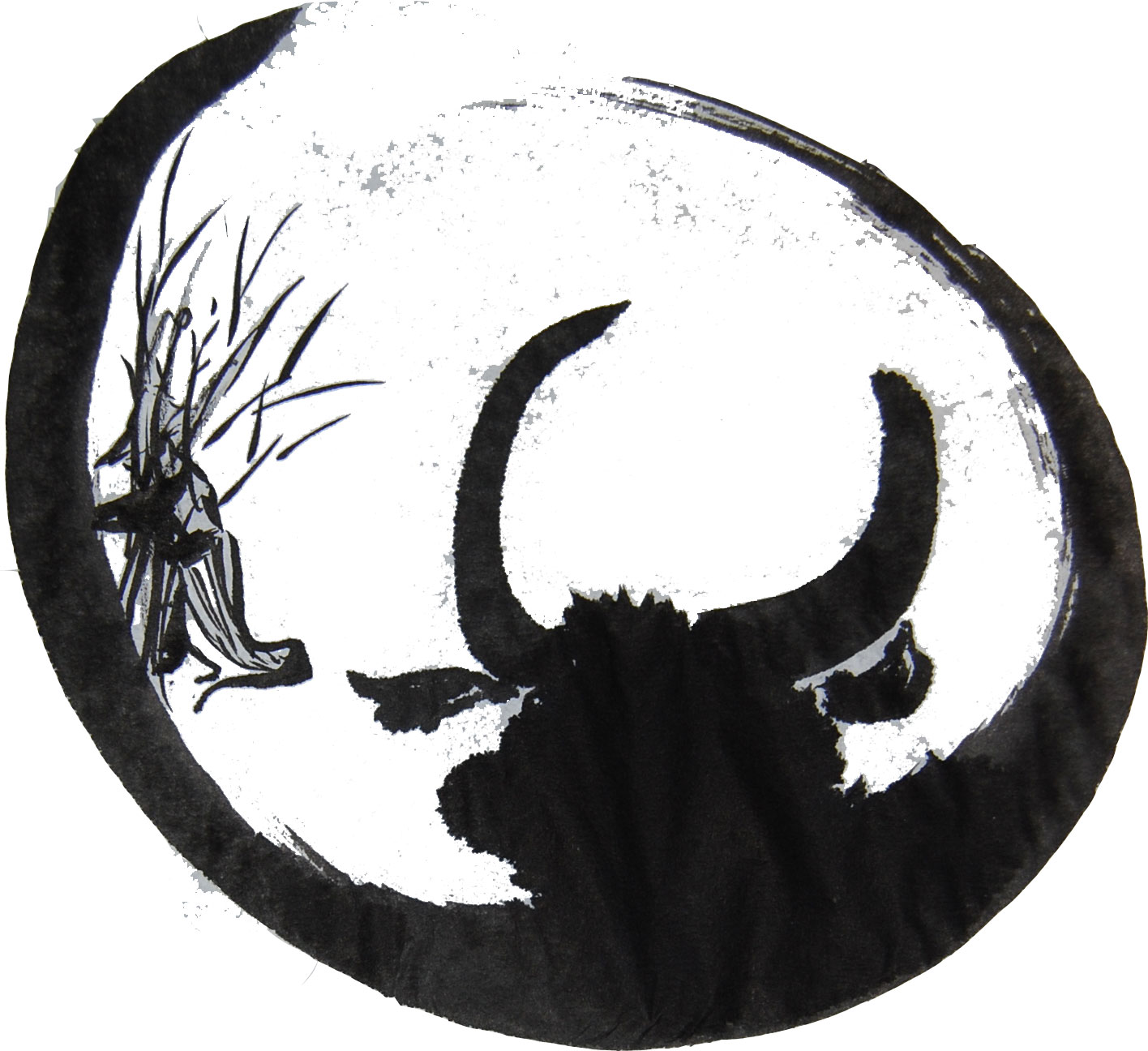
Now I’m wondering: what if my work is not to save myself from my Self but rather to love it?  What if I simply hold my delusional mind with respect for what it is?  What if that pesky ox who keeps revisiting my art table decided to turn and meet its herder with a “deep understanding and respect?”

What might happen then?

Thank you for practising,

Genju

Tomorrow: Transforming what is given

Unknown's avatar

only this moment

There’s no magic.  It often comes as a surprise to me when I meditate.  There’s no magic in the meditation that will take away what is present in this moment.  Damn.

In 1998 I was diagnosed with Fibromyalgia (FMS).  This was the year I was to start my second career as a psychologist in private practice.  It was also the year Frank and I had marked as the beginning of realizing our dream of working less and writing more.  We had planned carefully so that the finances would even out over the next 30 years and, having lived on one income for 15 years, we were confident that two working adults could figure out the math.  We hoped to be free for 1/3 of the week to follow our dreams and pay off the 5 digit debt from my studies.  I remember that we left for a vacation the hour after my appointment with the Rheumatologist. I don’t remember much about the vacation. There is no test that will diagnose FMS; usually physicians poke at the 18 trigger points and as you hit the roof or curl up in agony, they proclaim, “Yup, that’s positive.”  Other symptoms are unrelenting fatigue, sleep disturbances, aching joints, and a low tolerance for fools. 

Perhaps I jest about the tolerance for fools but not really.  FMS is a disease that has been (and sometimes still is) relegated to the “it’s all in your mind” which took over “it’s a woman thing” from medical ages past.  During graduate school, I recall being so fatigued and fuzzy that even I thought something was wrong.  At the appointment with my MD, I described my symptoms.  “You’re just bored,” he intoned.  “All that sitting in classes listening to boring things.”  Things have changed since those Dark Ages in the 1990’s.  We are better informed and the diagnosis is not faith-based (physicians now rarely say “I don’t believe in Fibromyalgia!”).  What has not changed is the attitude we hold to the disease.  On the day I was diagnosed, I rebelled.  This was not possib le and I was determined to prove it by working a full-time pace and doing every thing else at twice the intensity.  It didn’t take long to burn out and, humbled by my body’s power over me, I surrendered.

Looking back I can see this was a deeply challenging practice in facing my greed.  I wanted the life I didn’t have.  I wanted more of the life I had before.  I wanted the bright, sparkly things a higher salary bracket would bring me.  I wanted those cruises, trips to Europe, new cars, wardrobes and 2 hour gym sessions with a personal trainer.  I wanted to be like Oprah!  It was also a deep practice in meeting my aversion to what was present in this moment.  I didn’t want the breath-stilling fatigue, the inability to think a straight line, the aching joints.  I hated the reality of trembling muscles and legs that failed because the brain signals to move couldn’t activate them. Blindness helped to push me past my limits.  I ignored the impact on me as I tried to meet my obligations with work, family, and friends.

In reality, none of the things I thought had been taken from me would ever have been mine anyway.  Nevertheless, it felt like a real loss. I didn’t know this at the time but what was left was not the truth of my pain but who I became in its presence.  The gift of fuzzy thinking was an agonizing experience of each moment.  Only this moment was manageable. Sadly, I don’t tend to learn when the lesson is given in building blocks. As I became more and more resentful of the direction my life had taken, I took on all the wellness practices – meditation, yoga, mindfulness, vegetarianism – with a vengeance.  The magic of each ran out quickly and, once extinguished, I was left even more desperate for a fix (in all senses of the word).  “Wellness” was now an addiction.  The more I wanted “it,” the more I fell into a practice of greed.

That would become the focus of my practice for the next ten years.

Tomorrow: The work of greed in living well.

Thanks to Toni Bernhard, author of How to be Sick, for the inspiration to write this week’s posts.