


You’ll have to tell me if there’s a theme building through this week. Oh by the way, it’s so nice to be back writing every day. Thank you for being so patient with my wild absences.
This is the Norfolk Pine. It began one Christmas as a desktop tree. You know, the kind you see on the counters of banks and drugstores, plunked in a red foil diaper and pinned with a plastic bow that would make even a shih tzu die of shame. I think we bought it because it was the year my father died and none of us had the energy to put up the usual tree. It likely sat on our dining table – back in days when we had a dining room and not a zendo – decorated tastefully with an ornament or two.
It started to fail over time and I had enough vitality myself to just get it to the outer room. We call this euphemistically the “sunroom” perhaps meaning only that it faces south and gets a lot of sun. It is insulated but has no source of heat so in the winter everything freezes. The tree in its little pot sat on the shelf in the window from about March to the following May or June. I recall I was desperate to clean up the “sunroom” so I could use it as a potting shed. That meant everything had to go! I picked up the pot with the now-dessicated and dead tree – which came as no surprise being left for over a year in a room alternately hot and freezing cold with no water or nourishment. As I started to pull the little tree out, a flash of colour slipped out of view: there in a wedge between the main trunk and a branch was a little spot of green.
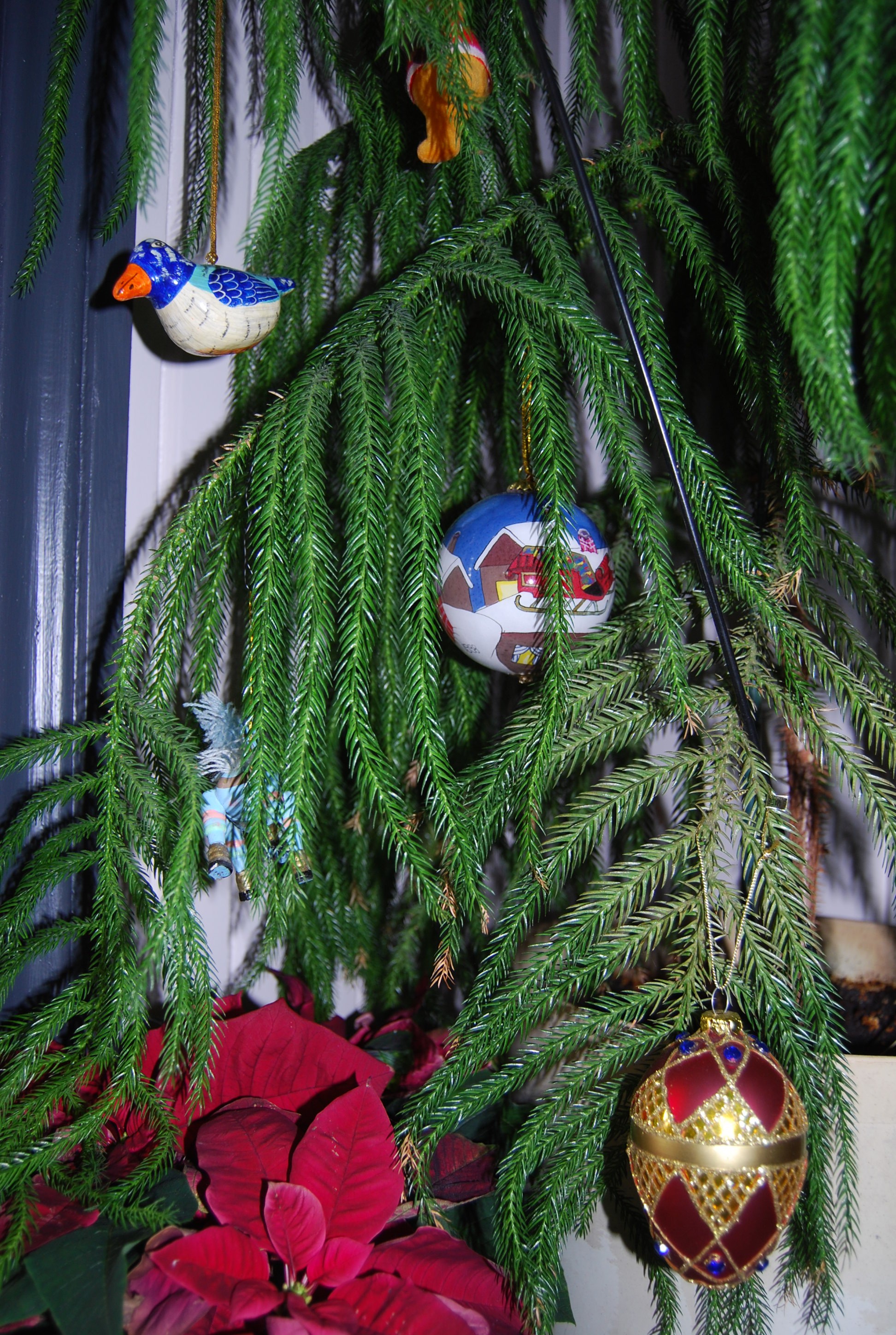 Over the years, the Norfolk has grown to about three feet. One Christmas, when I ran out of energy again, it served as the Seasonal Tree, happily reincarnating to its role before it was born.
There is surely a theme here, building defiantly to some conclusion.


 108zenbooks